Tag: ecommerce

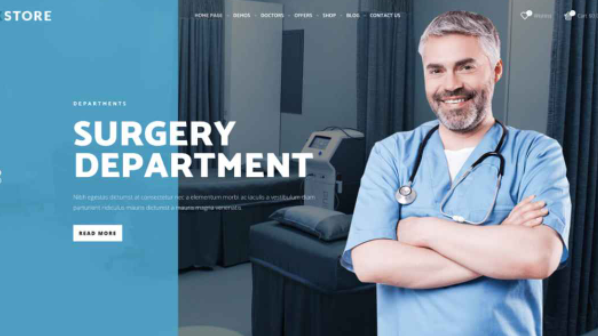
  • eCommerce WordPress Themes (Medical – WordPress WooCommerce Theme) By 8theme 2024

    eCommerce WordPress Themes (Medical – WordPress WooCommerce Theme) By 8theme 2024

    eCommerce WordPress Themes: Introducing the “Medical – WordPress WooCommerce Theme” by 8theme, a cutting-edge and highly customizable eCommerce WordPress theme tailored specifically for medical and healthcare-related businesses. As technology continues to reshape the way we interact with businesses, an engaging and user-friendly online presence is crucial for success.

    This WordPress WooCommerce theme seamlessly integrates the robust functionality of WooCommerce with the versatility of WordPress, offering a powerful platform for medical practitioners, pharmacies, and healthcare service providers to establish and grow their online presence. 8theme, a reputable name in the WordPress theme industry, brings forth a theme that not only meets the unique requirements of the medical sector but also elevates the visual aesthetics of the online shopping experience.

    Crafted with precision and attention to detail, the Medical theme boasts a modern design, responsive layout, and intuitive navigation, ensuring a seamless and enjoyable browsing experience for customers. From user-friendly product displays to secure online transactions, this theme encompasses essential eCommerce features, making it a valuable asset for businesses aiming to thrive in the competitive online market. 

    Join the future of digital commerce with the Medical – eCommerce WordPress Themes by 8theme, where innovation meets functionality to empower medical businesses for success in 2024 and beyond.

    How Do I Find Top Customers In WooCommerce?

    In WooCommerce, identifying and managing your top customers is essential for building strong customer relationships and tailoring your marketing strategies. 

    Here’s a step-by-step guide on how to find your top customers:

    Install and Activate WooCommerce Plugin:

    Ensure that your WooCommerce plugin is installed and activated on your WordPress site.

    Install a Reporting Plugin:

    To gain insights into your customer data, consider using a reporting plugin. There are several options available, such as “WooCommerce Admin,” “WooCommerce Reports,” or third-party plugins like “WooCommerce Customer History” or “WooCommerce Customer Manager.” Install and activate the chosen plugin.

    Access Customer Reports:

    Once the reporting plugin is activated, navigate to your WordPress dashboard and find the WooCommerce or Reporting section. Look for a submenu or tab related to customer reports.

    Review Customer Purchase History:

    Access the customer reports section, and you should find information on customer purchasing behavior. Look for metrics like total spent, number of orders, and average order value.

    Sort or Filter Customers:

    Most reporting plugins allow you to sort or filter customers based on various criteria. Look for options to sort customers by total spent or the number of orders.

    Identify Top Customers:

    Review the list of customers and identify those who consistently make significant purchases or have a high order frequency. These are your top customers.

    Export or Take Note:

    Depending on the reporting plugin, you may have the option to export the list of top customers. Alternatively, take note of their names or customer IDs for future reference.

    Leverage Customer Data:

    Once you’ve identified your top customers, use this information to tailor marketing strategies. Consider offering exclusive discounts, loyalty programs, or personalized promotions to further engage and retain these valuable customers.

    Features Of Medical – eCommerce WordPress Themes By 8theme:

    1. Advanced Search and Filtering:

    One standout feature is the theme’s advanced search and filtering capabilities. This empowers users to efficiently navigate through medical products, whether searching for specific medications, equipment, or health services. 

    The intuitive filters enhance the overall user experience, making it easier for customers to find precisely what they need.

    2. Telemedicine Integration:

    In response to the growing demand for telehealth services, the Medical theme offers seamless integration with telemedicine platforms. 

    This feature enables medical practitioners to provide virtual consultations, schedule online appointments, and maintain a secure channel for remote healthcare services.

    3. AI-driven Health Recommendations:

    Embracing cutting-edge technology, the theme incorporates AI-driven health recommendations. By analyzing user preferences, purchase history, and medical needs, the platform can intelligently suggest relevant products, fostering a personalized and engaging shopping experience.

    4. Multi-language Support for Global Reach:

    Recognizing the global nature of the medical field, the theme includes robust multi-language support. This ensures that medical businesses can reach a diverse audience, breaking down language barriers and expanding their market presence on an international scale.

    5. Customizable Health Information Panels:

    To enhance transparency and educate customers, the theme offers customizable health information panels. Medical businesses can showcase detailed product information, including usage instructions, side effects, and other relevant details, empowering customers to make informed decisions.

    6. Integrated Appointment Scheduling:

    Going beyond standard eCommerce functionalities, the theme integrates an advanced appointment scheduling system. Medical practitioners can manage their schedules, and customers can conveniently book appointments for in-person visits or virtual consultations directly through the online platform.

    7. Accessibility Features for Inclusive Design:

    Prioritizing inclusivity, the Medical theme includes accessibility features to ensure that individuals with diverse abilities can easily navigate and access the online store. This commitment to inclusive design aligns with the ethos of providing healthcare access to all.

    Conclusion:

    In conclusion, the eCommerce WordPress Themes (Medical – WordPress WooCommerce Theme) By 8theme  emerges as a powerhouse solution, seamlessly blending aesthetic appeal with innovative features specifically curated for the demanding landscape of medical and healthcare eCommerce. Its commitment to user-friendly design, coupled with advanced functionalities, positions it as a valuable asset for businesses seeking a distinctive online presence.

    The integration of cutting-edge features, such as advanced search and telemedicine support, reflects a forward-thinking approach to the evolving needs of the medical industry. By embracing artificial intelligence for health recommendations and prioritizing multi-language support and HIPAA compliance, the theme not only caters to the diverse global market but also ensures the highest standards of data security and regulatory adherence.

    Moreover, the inclusion of customizable health information panels and integrated appointment scheduling goes beyond traditional eCommerce capabilities, elevating the theme to a comprehensive platform for medical practitioners and healthcare providers. The commitment to accessibility features further underscores 8theme’s dedication to inclusive design, fostering an environment where healthcare is accessible to all.

    In the competitive realm of online commerce, the Medical theme by 8theme stands as a testament to the brand’s dedication to innovation, functionality, and user satisfaction. As businesses navigate the complexities of the digital marketplace, this theme serves as a strategic ally, empowering medical enterprises to not only meet but exceed the expectations of their customers in the ever-evolving landscape of digital commerce.

    Frequently Asked Qustions ( FAQ’s):

    Is the Medical WordPress WooCommerce Theme compatible with the latest versions of WordPress and WooCommerce?

    Answer: Yes, the Medical theme by 8theme is designed to be fully compatible with the latest versions of both WordPress and WooCommerce. We regularly update our themes to ensure seamless integration with the latest features and security enhancements of these platforms.

    Can I customize the color scheme and typography of the Medical theme to match my brand identity?

    Answer: Absolutely. The Medical theme comes with extensive customization options, allowing you to tailor the color scheme, typography, and other visual elements to align with your brand identity. Our user-friendly customization panel makes it easy for you to create a unique and branded online presence.

    Does the theme support appointment scheduling for medical consultations or services?

    Answer: Yes, the Medical theme includes integrated appointment scheduling features. Medical practitioners can manage their schedules, and customers can conveniently book appointments for either in-person visits or virtual consultations directly through the online platform. This feature enhances the accessibility and convenience of your medical services.

    Is the Medical theme GDPR compliant to ensure the privacy and security of customer data?

    Answer: Absolutely. We prioritize the privacy and security of customer data. The Medical theme is designed with GDPR compliance in mind, ensuring that all data, especially sensitive medical information, is handled with the utmost confidentiality and in accordance with global data protection standards.

    Can the theme accommodate an online pharmacy or medical product catalog with detailed specifications?

    Answer: Yes, the Medical theme is well-suited for online pharmacies and businesses selling medical products. It allows you to showcase detailed product information, including specifications, usage instructions, and any other relevant details.

    Also read: ApkZub, Download the Latest APKs for Free

  • The Role of an Ecommerce Marketing Consultant in Navigating the Digital Marketplace

    The Role of an Ecommerce Marketing Consultant in Navigating the Digital Marketplace

    In today’s ever-evolving digital landscape, the success of an ecommerce venture hinges not only on the quality of products or services but also on effective marketing strategies. Enter the Ecommerce Marketing Consultant – the guiding force behind navigating the intricacies of online retail and elevating businesses to new heights.

    Understanding the Ecommerce Ecosystem

    Ecommerce has revolutionized the way consumers shop, presenting a vast, dynamic, and competitive marketplace. Amidst this digital sea, an Ecommerce Marketing Consultant serves as a beacon, offering expertise in steering businesses toward success.

    Unravelling the Expertise

    The role of an Ecommerce Marketing Consultant spans a spectrum of crucial responsibilities:

    Strategic Planning and Market Analysis

    The consultant dives deep into market trends, consumer behavior, and competitor analysis. By understanding market nuances, they craft comprehensive strategies tailored to the unique needs and goals of each ecommerce business.

    Digital Branding and Positioning

    Creating a distinctive brand identity in the digital sphere is paramount. Consultants work on refining brand messaging, visual appeal, and storytelling to resonate with the target audience, fostering brand loyalty and recognition.

    Conversion Rate Optimization (CRO)

    Maximizing conversions lies at the core of ecommerce success. Consultants meticulously optimize websites, focusing on user experience, persuasive copywriting, and strategic placement of calls-to-action to drive sales.

    SEO and Content Strategy

    Visibility in the crowded online marketplace is key. Ecommerce Marketing Consultants employ robust SEO strategies and content marketing techniques to enhance search engine rankings, attract organic traffic, and establish thought leadership.

    Paid Advertising and Campaign Management

    From Google Ads to social media campaigns, consultants design and manage paid advertising initiatives. They analyze metrics, fine-tune campaigns, and allocate budgets efficiently to achieve maximum ROI.

    Data-Driven Insights and Analytics

    Harnessing the power of data, consultants analyze metrics and consumer behavior patterns. These insights fuel informed decision-making, enabling continuous optimization of marketing strategies.

    The Collaborative Approach

    Successful ecommerce ventures thrive on collaboration. Ecommerce Marketing Consultants work hand-in-hand with business owners, marketing teams, designers, and developers, fostering a cohesive approach toward achieving shared objectives.

    Adapting to Ever-Changing Trends

    In the rapidly evolving digital landscape, staying ahead requires agility and adaptability. Ecommerce Marketing Consultants are adept at embracing emerging technologies, trends, and consumer preferences, ensuring their strategies remain relevant and effective.

    Conclusion

    The role of an Ecommerce Marketing Consultant extends far beyond traditional marketing. They are navigators in the digital realm, guiding businesses through the complexities of online retail, empowering them to reach and engage their target audience effectively.

    In a world where online presence defines success, partnering with an Ecommerce Marketing Consultant is the catalyst that propels businesses toward sustained growth and prosperity in the dynamic ecommerce landscape.

  • Shopify Themes | Top 5 Outstanding Choices In 2023

    Shopify Themes | Top 5 Outstanding Choices In 2023

    Introduction 

    In today’s competitive eCommerce landscape, choosing the right Shopify theme for your online store is crucial. The design, user experience, and customization options play a significant role in attracting and engaging customers. This blog aims to showcase the best Shopify themes in 2023 that can elevate the design and functionality of your online store, providing you with a competitive edge in the market.

    Factors to Consider when Choosing a Shopify Theme 

    Before diving into the top Shopify themes, it’s important to understand the factors to consider when making your selection. Responsiveness, mobile-friendliness, and browser compatibility are key to ensuring a seamless experience across devices. Customization options, including color schemes, typography, and layout flexibility, allow you to create a unique and on-brand store. Additionally, prioritizing SEO optimization, page load speed, and overall performance will enhance search engine rankings and provide a smooth user experience.

    Theme 1: Dawn 

    Dawn is a versatile Shopify theme known for its clean and minimalistic design. It caters to a wide range of industries and offers a streamlined user experience. With features like quick buy, predictive search, and mega-navigation, Dawn enhances usability and encourages conversion. Real-life examples of successful online stores that have utilized Dawn will inspire you. The theme’s pricing options and pros and cons will help you make an informed decision, and its compatibility with different business types will be explored.

    Theme 2: Gecko 

    Gecko is a feature-rich Shopify theme designed for modern and fashion-forward online stores. Its stylish layout and customizable options allow you to create visually captivating storefronts. Showcasing real-life examples of online stores that have utilized Gecko will inspire you and insights into its capabilities. The pricing options, pros, and cons will be discussed to help you evaluate its suitability for your specific business needs.

    Theme 3: Fastor 

    Fastor is a highly flexible and multipurpose Shopify theme that caters to a wide range of industries. Its robust set of features, including advanced product filters, multi-currency support, and Instagram integration, make it a popular choice for online stores. Real-life examples will demonstrate how Fastor has been successfully implemented. The pricing options, pros, and cons will be explored to help you determine if Fastor is the right fit for your online store.

    Theme 4: Shella 

    Shella is a modern and trendy Shopify theme designed for fashion and apparel businesses. Its visually appealing design, enhanced product presentation, and extensive customization options make it a top choice. Real-life examples of successful online stores using Shella will inspire you. The blog will discuss the theme’s pricing options, pros, and cons, allowing you to make an informed decision.

    Theme 5: Kalles

    Kalles is a highly customizable and feature-rich Shopify theme tailored for high-performance online stores. With its unique design and comprehensive functionalities, Kalles enables you to create an immersive shopping experience. Real-life examples will showcase the versatility of Kalles in different industries. The pricing options, pros, and cons will help you assess whether Kalles fits your online store.

    Conclusion 

    Selecting the suitable Shopify theme enhances your online store’s success. Each of the showcased themes in this blog offers unique features and design elements to elevate your online store’s aesthetics and functionality. You can make an informed decision by considering factors like responsiveness, customization options, SEO optimization, and performance. Remember to align the selected theme with your specific business needs and goals. Explore the showcased themes, their real-life

  • Benefits of Adding Ecommerce to Your Website!

    Benefits of Adding Ecommerce to Your Website!

    Ecommerce has been steadily growing over the past few years, with more and more people opting to shop online instead of going to physical stores. In fact, according to a report, ecommerce sales are expected to reach $6.54 trillion by 2023. With this in mind, it is essential for businesses to have an online presence and offer ecommerce options on their website. In this article, we will discuss the benefits of adding ecommerce to your website.

    Benefits to know:

    Increased Reach and Customer Base:

    Having an ecommerce platform allows your business to reach a wider audience, regardless of geographical limitations. You can sell your products to customers in different cities, states, or even countries. This increased reach can also help you expand your customer base, attracting new customers who may not have been aware of your business before.

    24/7 Availability:

    Unlike physical stores that have fixed operating hours, ecommerce platforms are available 24/7. This means that customers can shop at their convenience, at any time of the day or night. This added convenience can lead to increased sales and customer satisfaction, as customers are not limited by store hours.

    Cost Savings:

    Having an ecommerce platform can also help you save on costs such as rent, utilities, and staffing. You can operate an ecommerce platform with a smaller team, as you won’t need as many employees as you would for a physical store. Additionally, you won’t have to worry about paying for a physical storefront or maintaining a large inventory, as you can keep your products in a warehouse or storage facility.

    Increased Sales and Revenue:

    Ecommerce platforms can help increase your sales and revenue, as they allow customers to easily make purchases with just a few clicks. Additionally, ecommerce platforms can help you upsell and cross-sell products, by suggesting complementary products to customers based on their purchase history or preferences. This can lead to increased revenue for your business.

    Improved Customer Experience:

    Ecommerce platforms can help improve the customer experience by providing a seamless and user-friendly interface. Customers can easily browse products, add them to their cart, and checkout without any hassle. Additionally, ecommerce platforms can offer features such as product reviews, which can help customers make informed purchasing decisions.

    Data Collection and Analysis:

    Ecommerce platforms can help you collect and analyze data on customer behavior, such as what products they are searching for, what they are buying, and how often they are buying. This data can help you make informed business decisions, such as what products to stock, what marketing campaigns to run, and how to improve your website.

    Flexibility and Scalability:

    Ecommerce platforms offer flexibility and scalability, as they can easily adapt to changes in your business. For example, if you want to add new products to your inventory or run a sale, you can do so with just a few clicks. Additionally, ecommerce platforms can scale with your business, allowing you to expand your offerings and reach as your business grows.

    Competitive Edge:

    In today’s digital age, having an ecommerce platform is essential for businesses to remain competitive. By offering ecommerce options, you can compete with other businesses in your industry and attract customers who prefer to shop online.

    Note: For all those people out there who wish to convert their existing website into an eCommerce store, Shoprocket.io has the solution. They offer code that can be added to an existing website and users can start selling online.

    Conclusion:

    Adding ecommerce to your website can offer numerous benefits for your business, including increased reach, cost savings, increased sales and revenue, improved customer experience, data collection and analysis, flexibility and scalability, and a competitive edge. With ecommerce sales expected to continue growing in the coming years, it is essential for businesses to have an online presence and offer ecommerce options on their website.


  • How Shopify became a giant e-commerce platform

    How Shopify became a giant e-commerce platform

    In barely three years since its inception as a tiny firm, the commerce platform Shopify has grown tremendously. Its gross merchandise volume has surpassed $7 billion, and it now has over 150,000 store owners.

    Introduction to Shopify

    Tobias Lutke, one of Shopify’s e-commerce platform founders, was unhappy with previous e-commerce platform alternatives. He built the storefront site with co-founders Daniel Weinand and Scott Lake.

    Today, Shopify occupies more than 325,000 shops for individual sellers and internet behemoths like Google and Tesla. Every month, the company generates sales revenue of over 20 million dollars.

    Unlike many other businesses, Shopify was rewarded for selling their product to clients and assisting them in becoming more successful on the platform. Shopify made more money the more money consumers made. This prompted Shopify to focus on helping their users become better merchants, which is the primary cause for their current success.

    Shopify has made possible for hundred of thousands of stores to generate revenues through the platform, which ultimately benefit their employees with different solutions.

    There are a lot of tactics that Shopify strictly follow in order to be a dominating e-commerce platform. In this blog, we will be discussing few of those ‘rules’ that they obey.

    Customer First

    Because they appreciated their clients and placed them first by having an excellent support crew, Shopify grew so much as an eCommerce company in just three years. They understood the importance of customers in their eCommerce business’s long-term success.

    What’s suitable for your customers isn’t always good for your business. Your clients are king, according to Marketo, and they deserve to be treated as such.

    RyanAir had less than one complaint about every 1,000 passengers in January 2012. In addition, the corporation responded to 99 per cent of complaints within seven business days.

    Shopify’s development team created solutions to assist e-commerce business owners, and it turned out to be a clever technique for them to boost your organic traffic considerably. They saved brand awareness for keyword search words at the top of the funnel.

    One of these solutions are PIM (product information management) tools, which allows these store owners (Shopify customers) to store, organize, manage and syndicate their products to Shopify in one click. That’s right. Just a click away.

    Moreover, Shopify has investigated and supplied content and tools to answer many of the questions that someone could have when beginning or setting up an e-commerce company. They developed entire subdomains that dominated the first page of Google by targeting relatively high-volume keyword search terms.

    Furthermore, Shopify allows its customers to create multiple stores on the platform, or even a single store in multiple languages.

    Problem-Solving Content Strategy

    Shopify’s website contains a wealth of helpful information that does not require an email opt-in to access. This screenshot shows that they have low bounce rates, average visit duration, and a high page per visit.

    Firstly, they have a curated blog that receives submissions from members and their marketing team, and they update it once a day with high-quality content (it got 27,000,000 page views last year).

    Secondly, they have in-depth ebook guides that provide insights to their clients and establish them as an eCommerce publishing authority.

    Shopify’s encyclopedia pages have been optimized so successfully that they presently rank #3 on Google for the short tail keyword “retail,” which receives 40,500 monthly searches.

    Is any of this simple to accomplish at this level? As you might expect, writing, developing, and managing this content takes a significant amount of time and resources for Shopify. Why would a corporation bother with this in the first place, you might wonder? Shopify, like our Vab Media Digital Marketing team, believes in the value of content marketing.

    Yes, seeing a return on investment from your content marketing attempts can take a long time, up to 6 to 12 months or more), which is why many businesses prefer to invest in paid search or influencer marketing instead to get immediate gratification.

    The bottom line is that Shopify, Gary Vee, Hubspot, Google, and First Round Capital would not bother putting together so much information and resources unless they knew the effort would pay off handsomely in the long term.

    They’ve put together one of the most thorough content marketing plans I’ve ever seen.

    Their content strategy also relies on producing content around their audience’s most often searched keywords or most frequently asked topics to assist individuals in their buyer journey better.

    Target Disparate Audiences

    As marketers, we’re frequently told that you should target a specific niche and tailor your marketing messaging to appeal to a small, highly targeted group of potential clients who are most likely to buy.

    Shopify, on the other hand, is doing precisely the opposite. They work with various business owners, each of which has a varied amount of knowledge, background, and eCommerce experience; thus, niche marketing isn’t appropriate for their platform.

    This implies Shopify will have to come up with a new strategy to reach out to various people, from those who are dreaming of their first eCommerce website to those who are well-established businesses.

    Landing Page Optimization by Shopify

    As discussed in Section 2, Shopify receives 27 million blog page visits and has a solid SEO strategy, aided by all of its content marketing efforts. Here is another approach they do to increase traffic.

    Customers can connect Shopify’s platform with many apps, plugins, and integrations (1,400+ in total). Many of these are well-known, highly successful businesses that individuals look up on their own.

    So, how can Shopify use this to their advantage?

    By designing unique, keyword-rich landing pages for each app they collaborate with. Many of these landing pages then appear in Google search results on the first few pages.

    To drive traffic and get you to download the app, Shopify works with integration partners like Zendesk. They also use the landing page to entice you to sign up for a free Shopify trial, which is displayed as the green button in the upper right corner.
    Conclusion
    Shopify has built a SaaS business based on subscription fees and transaction volume growth. They’ve also succeeded because of their ability to predict what the market wants and respond fast with valuable products.

    Shopify is straight-up pushing innovations, marketing, creating a community, and soaring growth.

    Now that I’ve dug a bit into some of their approaches and shown you how to implement them, it’s time for you to try out a few of them on your startup.