Converting km to miles is a common calculation for travelers, drivers, runners, cyclists, students, and anyone who needs to understand distances measured in different units. Kilometers are widely used in countries that follow the metric system, while miles are commonly used in the United States and the United Kingdom for certain road distances and everyday measurements.
Understanding how to convert kilometers into miles helps us interpret road signs, calculate travel distances, compare running and cycling routes, and estimate how far we need to travel. Although kilometers and miles measure the same physical quantity, their values differ because the two units use different scales.
The conversion itself is straightforward. We multiply the number of kilometers by a fixed conversion factor to calculate the equivalent distance in miles. Once we understand this simple rule, we can perform calculations quickly without needing complicated mathematical methods.
In this comprehensive guide, we explore the km to miles formula, provide useful conversion examples, explain common mistakes, and present a practical conversion chart for everyday use.
What Does KM to Miles Mean?
The term km to miles refers to converting a distance measured in kilometers into its equivalent value in miles.
A kilometer, abbreviated as km, is a unit of length in the metric system. It equals 1,000 meters and is commonly used to measure road distances, geographical locations, running routes, and the distances between cities.
A mile is a unit of length used in the imperial and US customary measurement systems. It is frequently used for road distances, speed limits, and travel measurements in places such as the United States.
The two units describe the same type of measurement, but one kilometer is shorter than one mile. Consequently, when we convert kilometers into miles, the numerical value becomes smaller.
For example:
-
1 kilometer = approximately 0.621371 miles
-
5 kilometers = approximately 3.10686 miles
-
10 kilometers = approximately 6.21371 miles
-
100 kilometers = approximately 62.1371 miles
These examples demonstrate why understanding the conversion factor is useful when interpreting distances across different measurement systems.
KM to Miles Conversion Formula
The most reliable way to convert kilometers to miles is to multiply the kilometer value by the standard conversion factor.
The Basic Formula
The formula is:
Miles = Kilometers × 0.6213711922
For most everyday calculations, we can simplify the formula to:
Miles = Kilometers × 0.621371
When we need a quick estimate, multiplying by 0.62 usually provides a reasonably close result. However, the more precise factor is preferable for calculations that require greater accuracy.
How to Calculate Kilometers to Miles Step by Step
We can follow three simple steps to convert any kilometer measurement into miles.
-
Identify the distance in kilometers.
-
Multiply that distance by 0.621371.
-
Round the result to the desired number of decimal places.
For example, suppose we want to convert 20 kilometers into miles.
Step 1: Start with 20 kilometers.
Step 2: Multiply 20 by 0.621371.
20 × 0.621371 = 12.42742
Step 3: Round the result to two decimal places.
Therefore, 20 kilometers = 12.43 miles.
This method works for short distances, long journeys, athletic events, and other situations where distance conversion is necessary.
KM to Miles Conversion Chart
A conversion chart makes it easier to find common distances without performing the calculation every time.
The following table shows frequently used kilometer-to-mile conversions.
| Kilometers (km) | Miles (mi) |
|---|---|
| 1 km | 0.62 miles |
| 2 km | 1.24 miles |
| 3 km | 1.86 miles |
| 4 km | 2.49 miles |
| 5 km | 3.11 miles |
| 8 km | 4.97 miles |
| 10 km | 6.21 miles |
| 12 km | 7.46 miles |
| 15 km | 9.32 miles |
| 20 km | 12.43 miles |
| 25 km | 15.53 miles |
| 30 km | 18.64 miles |
| 40 km | 24.85 miles |
| 50 km | 31.07 miles |
| 75 km | 46.60 miles |
| 100 km | 62.14 miles |
| 150 km | 93.21 miles |
| 200 km | 124.27 miles |
| 250 km | 155.34 miles |
| 500 km | 310.69 miles |
| 1,000 km | 621.37 miles |
Note: Values are rounded to two decimal places. Small differences may occur when calculations use rounded conversion factors.
Popular KM to Miles Conversions Explained
Certain distances appear frequently in travel, fitness, and everyday life. Learning their approximate mile equivalents makes mental calculations easier.
1 KM to Miles
One kilometer equals approximately 0.62 miles.
This distance is useful for understanding short walking routes, local journeys, and measurements on maps. Because one mile is longer than one kilometer, traveling one kilometer covers a little over three-fifths of a mile.
5 KM to Miles
Five kilometers equals approximately 3.11 miles.
This is a particularly familiar conversion among runners because the 5K is a popular race distance. People who use miles to track their running performance can understand a 5K as a route slightly longer than three miles.
10 KM to Miles
Ten kilometers equals approximately 6.21 miles.
A 10K running event is therefore slightly longer than six miles. This conversion is useful for comparing race distances, planning training schedules, and estimating the length of exercise routes.
20 KM to Miles
Twenty kilometers equals approximately 12.43 miles.
This distance can be useful when planning road trips, hiking routes, or cycling sessions. Converting it into miles makes it easier for people familiar with the imperial system to estimate the journey.
50 KM to Miles
Fifty kilometers equals approximately 31.07 miles.
This distance is common in endurance cycling, longer road journeys, and some organized athletic events. Knowing its mile equivalent helps us compare distances presented in different units.
100 KM to Miles
One hundred kilometers equals approximately 62.14 miles.
This conversion is useful for longer journeys, geographical measurements, and endurance activities. It also illustrates the difference between the two systems: a distance of 100 kilometers is more than 60 miles, but it is not equivalent to 100 miles.
Why Do We Multiply Kilometers by 0.621371?
The conversion factor comes from the internationally defined relationship between kilometers and miles.
One international mile equals exactly 1.609344 kilometers. To convert kilometers into miles, we divide the kilometer distance by 1.609344.
Therefore:
Miles = Kilometers ÷ 1.609344
This is mathematically equivalent to multiplying by approximately 0.6213711922.
For example:
30 ÷ 1.609344 ≈ 18.64 miles
Alternatively:
30 × 0.6213711922 ≈ 18.64 miles
Both methods produce the same result when sufficient precision is retained.
We can choose whichever formula is easier to remember. Multiplication is often convenient for calculators and spreadsheets, while division can be useful when we already know the relationship between one mile and its kilometer equivalent.
How to Convert KM to Miles Without a Calculator
We do not always need a calculator to estimate a distance in miles. A simple mental calculation can provide a useful approximation.
Method 1: Multiply by 0.6
For a quick estimate, multiply the kilometer value by 0.6.
For example:
10 × 0.6 = 6 miles
The precise answer is approximately 6.21 miles, so the estimate is close enough for many everyday situations.
Method 2: Use the Five-Kilometer Reference
Remember that 5 kilometers is approximately 3.1 miles.
We can use this familiar distance to estimate larger measurements. For example, 15 kilometers equals three groups of 5 kilometers.
3 × 3.1 = 9.3 miles
The more precise answer is approximately 9.32 miles.
Method 3: Remember That One Mile Is About 1.6 Kilometers
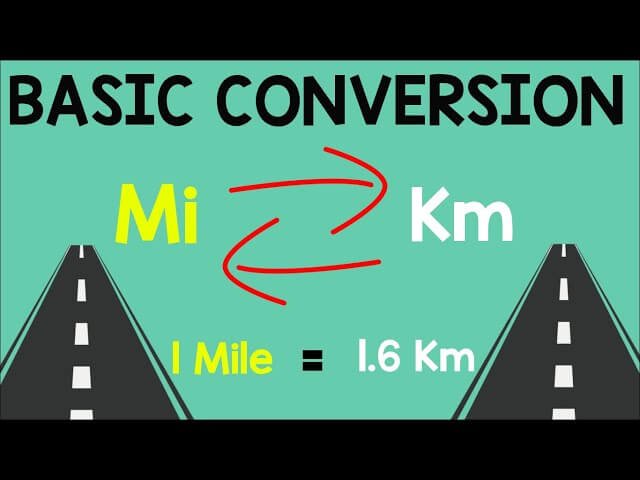
Another useful shortcut is to remember that one mile is approximately 1.6 kilometers.
This relationship is particularly useful when we want to estimate whether a kilometer distance is closer to one mile, five miles, or ten miles.
These mental methods are practical for quick estimates, but we should use the full conversion factor when precision matters.
KM to Miles for Driving and Road Trips
Converting kilometers to miles is especially helpful when driving in countries that use different measurement systems.
For example, a road sign showing a destination 80 kilometers away represents a distance of approximately 49.71 miles. A traveler accustomed to miles can use this conversion to estimate the remaining journey.
Distance conversion is also useful when renting a vehicle abroad, comparing route descriptions, or interpreting travel information from international navigation services.
However, distance and speed are different measurements. A distance of 100 kilometers converts to 62.14 miles, while a speed of 100 kilometers per hour converts to approximately 62.14 miles per hour.
The numerical relationship is the same because both conversions involve the same length units, but we must retain the appropriate time unit when converting speeds.
For accurate travel planning, we should also consider traffic, road conditions, speed limits, and the route itself. Converting the distance alone does not tell us how long a journey will take.
KM to Miles for Running, Walking, and Cycling
Distance conversion is equally valuable for physical activities.
Running
Runners often encounter distances in both kilometers and miles. A 5K race is approximately 3.11 miles, while a 10K race is approximately 6.21 miles.
Understanding these equivalents allows athletes to compare training plans and race distances without confusing the total distance covered.
Walking
People tracking daily walks may encounter distances in either unit, depending on their fitness application, smartwatch, or phone settings.
For example, walking 8 kilometers means covering approximately 4.97 miles. This is close to five miles, making it easy to understand the distance at a glance.
Cycling
Cyclists frequently compare routes, endurance goals, and training distances across measurement systems.
A 40-kilometer cycling route is approximately 24.85 miles. This information can help cyclists familiar with miles understand the length of an unfamiliar route.
In every case, using the correct conversion helps us compare distances consistently and set realistic goals.
Difference Between Kilometers and Miles
Kilometers and miles are both units of length, but they belong to different measurement traditions.
| Feature | Kilometer | Mile |
|---|---|---|
| Abbreviation | km | mi |
| Measurement system | Metric | Imperial and US customary |
| Meters | 1,000 meters | 1,609.344 meters |
| Equivalent in miles | 0.621371 miles | 1 mile |
| Common applications | Road distances, maps, running | Road distances, running, travel |
| Conversion to the other unit | Multiply by 0.621371 | Multiply by 1.609344 |
The metric system is organized around powers of ten, which makes relationships between units such as meters and kilometers straightforward. The mile follows a different scale, so converting between kilometers and miles requires a conversion factor.
Neither unit is inherently more accurate than the other. Accuracy depends on how carefully we measure the original distance and perform the conversion.
Common Mistakes When Converting KM to Miles
Although the calculation is simple, several mistakes can produce incorrect results.
Using the Wrong Conversion Factor
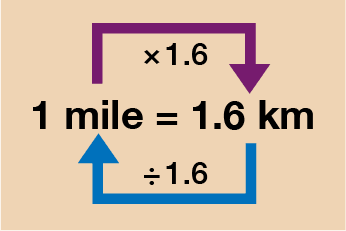
The correct factor for kilometers to miles is approximately 0.621371. Using 1.609344 in a multiplication calculation converts miles to kilometers instead.
We should remember:
-
Kilometers to miles: Multiply by 0.621371.
-
Miles to kilometers: Multiply by 1.609344.
Confusing Distance With Speed
Kilometers and miles measure distance, while kilometers per hour and miles per hour measure speed.
When converting a speed, we must preserve the time component. For example, 80 km/h is approximately 49.71 mph, not simply 49.71 miles.
Rounding Too Early
Rounding the conversion factor too aggressively can create small errors, particularly when converting long distances.
For the best results, we should use 0.6213711922 during the calculation and round the final answer only when necessary.
Assuming Kilometers and Miles Are Equal
One kilometer is not one mile. A mile is approximately 1.609 kilometers, so treating the two units as interchangeable can significantly distort distance estimates.
Frequently Asked Questions About KM to Miles
1. How many miles are in one kilometer?
One kilometer equals approximately 0.621371 miles. For quick calculations, we can round this to 0.62 miles.
2. How do we convert kilometers to miles?
Multiply the number of kilometers by 0.6213711922. The result is the equivalent distance in miles.
3. How many miles are 5 kilometers?
Five kilometers equals approximately 3.11 miles. This is the standard distance of a 5K running event expressed in miles.
4. How many miles are 10 kilometers?
Ten kilometers equals approximately 6.21 miles. This conversion is commonly used when comparing running races and exercise distances.
5. Is one mile longer than one kilometer?
Yes. One international mile equals exactly 1.609344 kilometers, making it longer than one kilometer.
6. How many miles are 100 kilometers?
One hundred kilometers equals approximately 62.14 miles.
7. Can we convert kilometers to miles mentally?
Yes. Multiplying by 0.6 gives a quick estimate, while remembering that 5 kilometers is approximately 3.1 miles helps with common distances. For more accurate results, use the full conversion factor.
8. What is the easiest km to miles formula to remember?
The easiest formula is:
Miles = Kilometers × 0.621371
For quick everyday estimates, we can use 0.62 instead.
9. How many kilometers are in one mile?
One international mile equals exactly 1.609344 kilometers. To convert miles into kilometers, multiply the mile value by 1.609344.
10. Why do some countries use kilometers while others use miles?
Countries have developed different measurement traditions. Most countries use the metric system for road distances, while the United States continues to use miles for many road-distance measurements. The United Kingdom uses a combination of systems, including miles for road distances and kilometers in many other contexts.
Conclusion: Convert KM to Miles Easily and Accurately
Converting km to miles is a straightforward process once we understand the relationship between the two units. The essential rule is to multiply kilometers by approximately 0.621371 to obtain the equivalent distance in miles.
Whether we are planning a road trip, preparing for a running event, comparing cycling routes, or reading an international distance chart, this formula provides a reliable way to understand measurements across different systems.
Remember the most useful conversions: 1 kilometer equals 0.62 miles, 5 kilometers equals 3.11 miles, 10 kilometers equals 6.21 miles, and 100 kilometers equals 62.14 miles.
By learning the formula, using the conversion chart, and avoiding common calculation mistakes, we can convert kilometers to miles quickly and confidently whenever the need arises.
Read More: techinshorts.com