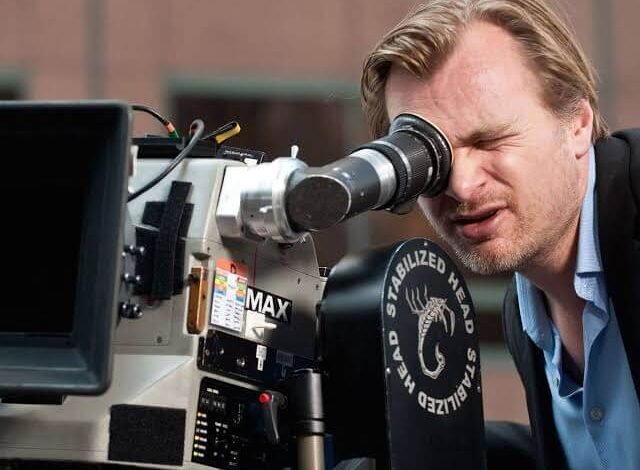
Christopher Nolan is a British-American film director, screenwriter, and producer celebrated for creating ambitious movies that combine intellectual puzzles, emotional storytelling, and spectacular cinematic experiences. Born on July 30, 1970, in London, England, Nolan has become one of the most influential filmmakers of his generation. His best-known films include Memento, The Dark Knight, Inception, Interstellar, and Oppenheimer. His work frequently explores complex subjects such as memory, time, identity, morality, sacrifice, and the consequences of human ambition.
What makes Nolan different from many other directors is his ability to bring challenging ideas to mainstream audiences. Rather than relying entirely on familiar storytelling techniques, he often builds narratives that require viewers to pay close attention. His movies can feel like intricate puzzles, yet their strongest moments usually depend on recognizable human emotions, including grief, love, fear, and hope. This combination has helped him attract audiences who enjoy both large-scale entertainment and thought-provoking cinema.
Early Life and Education
Christopher Edward Nolan grew up between England and the United States, experiences that exposed him to different cultures and perspectives. His interest in filmmaking developed during childhood, when he experimented with a Super 8 camera and created short films using toys and improvised sets. Like many young filmmakers, he began with limited resources, but his curiosity about visual storytelling encouraged him to explore how camera angles, editing, and sound could transform an ordinary scene into something memorable.
Nolan later attended University College London, where he studied English literature and participated in the university’s film society. His literary education helped develop his understanding of narrative structure, character motivation, and storytelling techniques. These interests would eventually become important features of his professional work. His early experiences demonstrate that filmmaking is not simply about expensive equipment or impressive visual effects; it also depends on imagination, patience, and a willingness to experiment.
How Christopher Nolan Started His Career
From Independent Films to Hollywood
Nolan’s early career was built through independent filmmaking. His first feature film, Following (1998), was a low-budget thriller about a writer who becomes fascinated with following strangers and gradually enters a dangerous world. The film attracted attention for its unusual narrative structure and economical production, demonstrating that compelling storytelling could succeed without a massive Hollywood budget.
His next feature, Memento (2000), established him as a director with an unmistakable creative identity. The psychological thriller follows a man struggling with short-term memory loss as he attempts to identify his wife’s killer. Its fragmented narrative makes the audience experience uncertainty alongside the protagonist. The film received widespread critical attention and helped open doors to larger productions.
Nolan continued developing his reputation with Insomnia (2002), a crime thriller starring Al Pacino and Robin Williams. In 2005, he directed Batman Begins, introducing a darker, more psychologically grounded interpretation of the famous superhero. This project marked an important transition from independent filmmaking to major studio productions.
Christopher Nolan’s Most Famous Movies
The Dark Knight Trilogy
Key films: Batman Begins (2005), The Dark Knight (2008), and The Dark Knight Rises (2012).
Nolan’s Batman trilogy helped redefine superhero cinema by treating its central character as a psychologically complicated individual rather than an invincible comic-book hero. Batman Begins explored Bruce Wayne’s fears, training, and transformation into Gotham City’s protector. The film grounded its extraordinary premise in recognizable questions about justice, trauma, responsibility, and personal identity.
The Dark Knight expanded these themes through the conflict between Batman and the Joker. Its examination of chaos, morality, and difficult ethical choices helped make it one of the most widely discussed superhero films ever released. The trilogy concluded with The Dark Knight Rises, which examined sacrifice, resilience, and the possibility of rebuilding after personal and social collapse. Together, the films demonstrated Nolan’s ability to combine spectacular action with meaningful character development.
Inception and Interstellar
Two science-fiction films that showcase Nolan’s imagination and interest in human perception.
Released in 2010, Inception follows a team that enters people’s dreams to extract information and attempts an unusually ambitious operation involving the planting of an idea. The film blends action, espionage, and psychological science fiction while playing with the relationship between dreams and reality. Its elaborate dream environments, layered timelines, and memorable ending encouraged audiences to debate what they had witnessed long after leaving the cinema.
Interstellar (2014) explores humanity’s search for survival through space exploration. Featuring Matthew McConaughey as Cooper, the story combines cosmic phenomena with a deeply personal relationship between a father and his daughter. Scientific concepts involving gravity, relativity, and time dilation shape the narrative, but its emotional foundation is love and the sacrifices people make for future generations.
These films illustrate an important feature of Nolan’s work: extraordinary concepts become more compelling when they affect ordinary human relationships. The science and spectacle attract attention, while the emotional stakes give audiences a reason to care.
Dunkirk, Tenet, and Oppenheimer
Nolan continued experimenting with storytelling through Dunkirk (2017), a war film depicting the evacuation of Allied soldiers during World War II. Instead of following a single conventional timeline, the film presents events across different time frames, creating suspense through the interaction of land, sea, and air narratives. Its restrained dialogue, powerful sound design, and immersive cinematography demonstrate how tension can emerge from editing and atmosphere rather than lengthy explanations.
In Tenet (2020), Nolan explored the concept of time inversion, creating an espionage thriller in which some objects and people move backward through time. Its complicated action sequences challenged audiences to interpret what was happening while the story unfolded. Although its narrative divided viewers, the film demonstrated Nolan’s willingness to take creative risks.
His 2023 film, Oppenheimer, marked another major career achievement. Starring Cillian Murphy as physicist J. Robert Oppenheimer, the historical drama examines the development of the atomic bomb and the moral consequences of scientific discovery. At the 2024 Academy Awards, Nolan won Best Director, while Oppenheimer received seven Oscars, including Best Picture.
Christopher Nolan’s Unique Filmmaking Style
One of the defining characteristics of Christopher Nolan’s filmmaking is his fascination with nonlinear storytelling. He frequently rearranges events, shifts between different timelines, and withholds information to encourage viewers to participate actively in the narrative. In films such as Memento and Inception, the structure itself becomes part of the experience. Rather than simply watching events unfold, audiences must interpret clues, reconsider earlier scenes, and sometimes question their own understanding of the story.
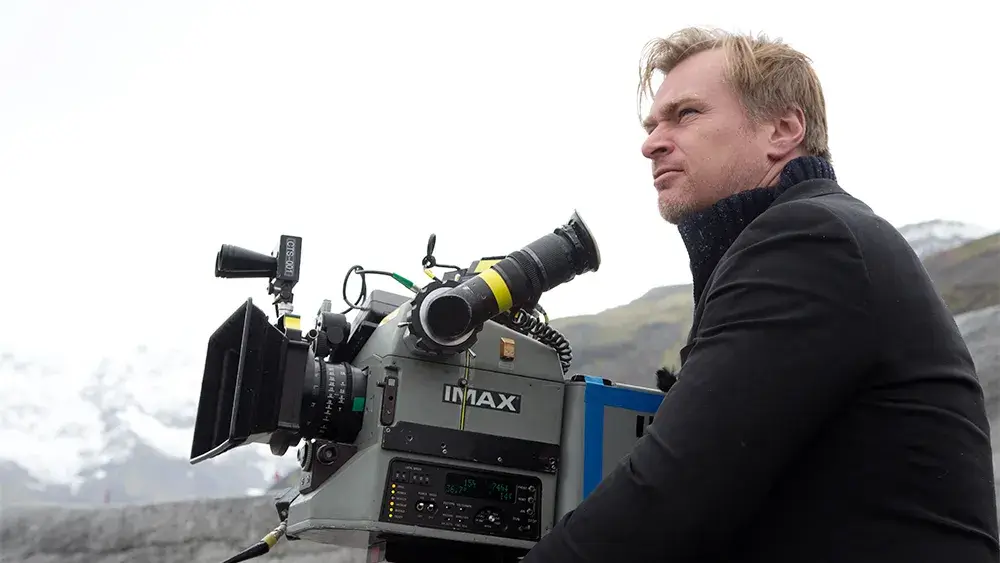
Nolan is also known for his preference for practical filmmaking techniques. He often combines physical sets, real locations, carefully coordinated stunts, and in-camera effects with computer-generated imagery. This approach can give action sequences a tangible quality, making extraordinary situations feel physically convincing. His interest in large-format cinematography, including IMAX, also reflects his belief that the theatrical environment can enhance the emotional and visual impact of a film.
Another important element is his collaboration with composers and cinematographers. His films frequently use carefully structured sound, dramatic musical themes, and visual contrasts to increase tension. At times, the sound design can feel overwhelming, and the complexity of his plots may leave some viewers confused. However, these choices form part of a distinctive approach that encourages discussion and rewards repeated viewing.
Awards and Career Achievements
Christopher Nolan’s achievements reflect both critical recognition and substantial popular success. His career spans independent thrillers, superhero films, science fiction, war dramas, and historical biographies, showing a willingness to explore different genres while maintaining a recognizable creative identity.
His major career milestones include:
-
Academy Awards: Nolan won Best Director for Oppenheimer at the 2024 Oscars.
-
Best Picture: He shared the Best Picture win as a producer of Oppenheimer.
-
Screenwriting recognition: His work on Memento, Inception, and Oppenheimer has earned major industry attention.
-
Commercial success: Films such as The Dark Knight, Inception, and Oppenheimer reached large international audiences.
-
Technical influence: His commitment to theatrical presentation and IMAX filmmaking has contributed to conversations about the future of cinema.
These accomplishments are significant because Nolan has repeatedly demonstrated that original ideas can succeed on a large scale. His movies ask audiences to think, but they also deliver suspense, memorable performances, and impressive visual experiences.
The Odyssey and His Latest Cinematic Work
Nolan’s 2026 film The Odyssey brings another ambitious project to his filmography. Based on the ancient Greek epic traditionally attributed to Homer, the movie follows Odysseus on his dangerous journey home after the Trojan War. Matt Damon stars as Odysseus, with a large ensemble cast that includes Anne Hathaway, Tom Holland, Zendaya, and Robert Pattinson. The film was released in July 2026, making it Nolan’s first feature following Oppenheimer.
The project also demonstrates Nolan’s continuing interest in combining established stories with large-scale cinematic techniques. The Odyssey is already a familiar story in literature, but its themes of survival, loyalty, temptation, and the desire to return home offer considerable scope for visual storytelling. Nolan’s adaptation brings these themes to a contemporary film audience while retaining the epic journey at the heart of the original tale.
For viewers following his career, the movie represents another shift in subject matter. Rather than focusing on modern scientific history or futuristic technology, Nolan turns toward ancient mythology. This change highlights his range as a filmmaker and his continuing interest in stories that explore human choices under extraordinary pressure.
Personal Life and Creative Partnerships
Christopher Nolan is married to film producer Emma Thomas, who has played an important role in bringing many of his projects to the screen. Their professional partnership has contributed to films including The Dark Knight, Inception, Interstellar, and Oppenheimer. Thomas’s production experience and Nolan’s directing and writing skills have helped them develop ambitious projects while coordinating the practical demands of large film productions.
Nolan also frequently collaborates with actors and members of his creative teams across multiple films. Performers such as Michael Caine, Cillian Murphy, and Tom Hardy have appeared in more than one of his projects. These continuing relationships help establish creative familiarity, allowing actors and filmmakers to develop a shared understanding of his approach to character, atmosphere, and storytelling.
Despite his international success, Nolan generally maintains a private personal life. He is better known publicly for his filmmaking philosophy than for celebrity appearances or social media activity. His career offers a useful reminder that a director’s lasting reputation often depends more on the work they create than on how much of their private world they share with the public.
Why Christopher Nolan Remains Influential
Christopher Nolan remains influential because he consistently challenges expectations about what mainstream movies can accomplish. His films demonstrate that audiences will engage with complicated plots, unfamiliar scientific concepts, historical debates, and morally difficult characters when those elements are presented through compelling storytelling.
His work has also encouraged viewers to reconsider the relationship between entertainment and intellectual engagement. Inception turns dreams into an elaborate cinematic puzzle, Interstellar uses space exploration to examine family relationships, and Oppenheimer explores the responsibilities that accompany scientific power. Each film approaches a different subject, yet all invite audiences to think about consequences, uncertainty, and human limitations.
Nolan’s influence extends beyond individual movies. His advocacy for theatrical presentation and large-format filmmaking supports the idea that cinema offers an experience distinct from watching content on a small screen. Although his methods are not universally appealing, his willingness to pursue ambitious projects has helped keep discussions about original filmmaking alive in an industry often dominated by established franchises.
Ultimately, his greatest strength may be his combination of technical ambition and emotional storytelling. His movies can be difficult, intense, or unconventional, but they rarely feel designed merely to follow a trend. That commitment to a personal creative vision is a major reason his work continues to attract attention.
Conclusion
Christopher Nolan has established himself as one of modern cinema’s most distinctive directors through his imaginative storytelling, technical ambition, and interest in complex human questions. From the independent thriller Following to the psychological puzzle of Memento, the superhero world of The Dark Knight, the science fiction of Interstellar, and the historical drama of Oppenheimer, his career demonstrates remarkable creative range.
His achievements at the Academy Awards strengthened his reputation, while The Odyssey represents another ambitious chapter in his filmmaking journey. Whether exploring dreams, time, war, scientific responsibility, or ancient mythology, Nolan consistently looks for ways to make familiar themes feel new.
For anyone interested in filmmaking, storytelling, or modern Hollywood, his career offers an engaging example of how creative experimentation and technical skill can work together. His films may not provide every answer, but they encourage audiences to ask better questions—and that is part of what makes Christopher Nolan such an important filmmaker.
Frequently Asked Questions About Christopher Nolan
1. Who is Christopher Nolan?
Christopher Nolan is a British-American filmmaker known for directing and writing acclaimed movies such as Inception, The Dark Knight, Interstellar, and Oppenheimer. He is recognized for complex narratives, practical filmmaking techniques, and visually ambitious storytelling.
2. What is Christopher Nolan’s most famous movie?
There is no single definitive answer because popularity depends on personal preference. The Dark Knight, Inception, Interstellar, and Oppenheimer are among his best-known films, each representing a different aspect of his filmmaking style.
3. Has Christopher Nolan won an Oscar?
Yes. At the 2024 Academy Awards, Nolan won the Oscar for Best Director for Oppenheimer. The film also won Best Picture and five additional awards, bringing its total to seven Oscars.
4. Who is Christopher Nolan’s wife?
Christopher Nolan is married to Emma Thomas, a film producer who has collaborated with him on many of his major projects. Their professional partnership has been an important part of his filmmaking career.
5. What is Christopher Nolan’s latest movie?
As of October 2026, Nolan’s latest feature film is The Odyssey, an adaptation of the ancient Greek epic starring Matt Damon as Odysseus. The film was released in July 2026.