Distance learning has emerged as a transformative force in the educational landscape, reshaping how students engage with their studies and interact with instructors. The recent global events, particularly the COVID-19 pandemic, have accelerated the shift towards remote education, compelling educators and institutions to adopt innovative teaching strategies. As a result, the need for effective distance learning resources has become more pronounced, not only to facilitate learning but also to ensure student engagement during these challenging times.
The transition to remote learning environments has presented both opportunities and challenges for educators. On one hand, the ability to leverage technology in classroom settings opens up a world of possibilities for interactive learning experiences. Conversely, the lack of face-to-face interaction may hinder some students’ ability to stay engaged and motivated. Therefore, understanding the importance of distance learning resources is essential for fostering an effective educational experience in this new era.
Educators now find themselves tasked with the responsibility of adapting traditional teaching methodologies to fit online platforms. This includes creating engaging content that maintains student interest while ensuring the curriculum’s integrity. Various digital tools and resources, such as video lectures, interactive quizzes, and collaborative platforms, have surfaced as vital components in enhancing the learning experience. It is crucial for educators to curate and implement these resources thoughtfully, tailoring their approaches to meet the diverse needs of their students.
Ultimately, the landscape of education continues to evolve, with distance learning becoming a standard mode of instruction. As we explore the various methods and tools available, it is imperative that educators harness these distance learning resources to optimize student engagement and success in this transformed educational environment.
Understanding Distance Learning Resources
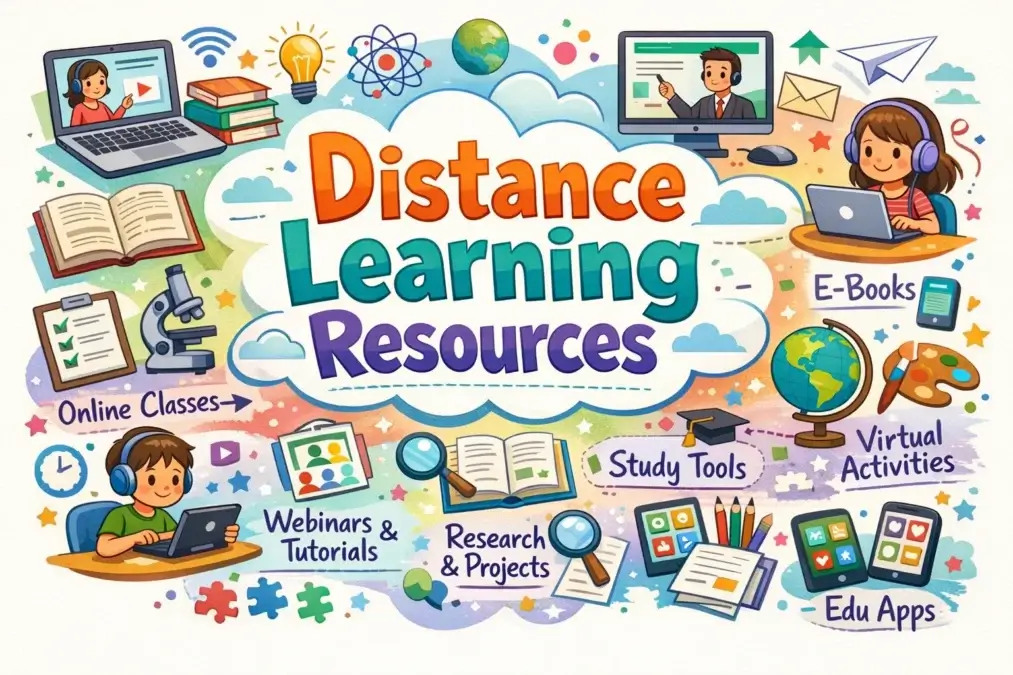
Distance learning resources are tools and materials that facilitate education in a non-traditional setting, enabling students to engage with their learning process outside of a conventional classroom environment. These resources encompass a wide array of formats, ensuring that educators can effectively cater to diverse learning styles while supporting students from various locations.
One primary category of distance learning resources includes multimedia content, which integrates audio, video, and images to enhance the educational experience. Such resources help in breaking down complex concepts and making learning more engaging. For instance, video lectures can demonstrate practical applications, while interactive simulations can allow students to explore theoretical ideas in a hands-on manner.
E-books are another crucial distance learning resource, providing students with convenient access to a vast range of texts. They enable learners to read and study on their devices, which can be particularly beneficial for those who may not have physical access to libraries or bookstores. The search functionality of e-books also facilitates rapid information retrieval, thereby promoting efficient study practices.
Moreover, interactive software serves as a vital resource in distance education, encompassing applications that promote collaboration, problem-solving, and skill development. Tools such as online discussion forums, quizzes, and gamified learning experiences engage students actively, encouraging them to take ownership of their education.
Lastly, virtual classrooms play an integral role in distance learning. They recreate the traditional classroom experience by allowing real-time interaction between instructors and students through audio and video conferencing platforms. This not only enhances communication but also fosters a sense of community among learners, despite physical distances.
Key Features of Effective Distance Learning Resources
Distance learning resources have become essential tools in education, particularly in recent years when remote learning has surged in popularity. To effectively engage students, these resources must encompass several key features that enhance learning experiences. One of the most critical characteristics is accessibility. This means that learning materials should be available to all students, regardless of their location or technology access. Resources that support diverse needs, including different learning styles and disabilities, will ensure that every student can participate fully in the educational process.
Another vital feature is interactivity. Resources that incorporate interactive elements, such as quizzes, discussion boards, and multimedia content, encourage student engagement and active participation. This interactivity can promote a deeper understanding of the material, as students are more likely to retain information when they actively engage with it rather than passively consuming content.
Moreover, adaptability plays a crucial role in distance learning resources. Effective materials should be flexible enough to cater to the varying paces at which students learn. This adaptability allows educators to tailor lessons to meet the individual needs of their students, fostering a more personalized learning environment.
Lastly, the richness of content is imperative. Resources should not only be informative but also engaging and relevant to students’ lives. High-quality materials that include real-world applications, case studies, and contemporary references can help contextualize the learning process, making it more meaningful and enjoyable for students.
In conclusion, the effectiveness of distance learning resources hinges on their accessibility, interactivity, adaptability, and content richness. Educators should prioritize these features when selecting materials to enhance the learning experience for their students.
Engagement Strategies for Distance Learning
In order to promote effective learning in a distance education environment, it is essential for educators to implement various engagement strategies tailored to capture and maintain student interest. One effective approach is gamification, which involves the application of game-design elements in non-game contexts. By integrating elements such as points systems, badges, and interactive challenges, educators can transform traditional coursework into an engaging experience that motivates students to participate actively and enhances their learning outcomes.
Another valuable method is project-based learning (PBL), which encourages students to actively explore real-world problems and challenges. Through PBL, learners work on collaborative projects that require critical thinking, creativity, and problem-solving skills. This not only fosters engagement but also helps students acquire deeper knowledge as they connect theoretical concepts to practical applications. By collaborating online using digital tools, they can share their findings and present their work through various platforms, thus reinforcing their learning experience.
Furthermore, leveraging discussion forums and chat platforms can significantly enhance student interaction in a distance learning setting. Engaging students in discussions about course materials or related topics allows them to voice their thoughts, ask questions, and engage in meaningful dialogue with their peers and instructors. Regularly scheduled online office hours can be an additional avenue for students to seek clarification and support, nurturing a sense of connection despite physical distance.
In summary, implementing engagement strategies such as gamification, project-based learning, and fostering online communication through forums and chats plays a crucial role in sustaining student motivation and interaction in distance learning environments. These techniques not only strengthen educational experiences but also contribute to the development of essential skills that are increasingly valuable in today’s interconnected world.
Digital Platforms for Accessing Learning Resources
With the rise of distance education, various digital platforms have emerged to provide students and educators with a plethora of learning resources. Two of the most prominent platforms are Google Classroom and Moodle, both of which offer robust features aimed at enhancing the educational experience.
Google Classroom stands out for its user-friendly interface, which facilitates seamless interaction between teachers and students. This platform integrates well with other Google services, allowing users to easily access documents through Google Drive and utilize tools like Google Docs and Sheets for collaborative projects. Additionally, Google Classroom supports the distribution of assignments, feedback mechanisms, and progress tracking, making it a comprehensive solution for both educators and learners.
On the other hand, Moodle is an open-source learning management system that provides a high level of customization and flexibility. Institutions can tailor Moodle according to their specific needs, offering a diverse range of resources including multimedia content, quizzes, and forums. One of the distinctive features of Moodle is its ability to support various learning styles through an array of activities designed to engage students actively. The platform also includes functionalities for tracking student performance and engagement, thereby assisting educators in fine-tuning their instructional approaches.
When comparing these platforms, it is crucial to consider the diversity of learning materials they provide. Google Classroom excels in integrating familiar tools, making it accessible for novice users. In contrast, Moodle’s depth of features may require a steeper learning curve but rewards users with greater flexibility. Ultimately, the choice of platform may depend on institutional priorities, user familiarity, and the specific educational goals being pursued.
Creating Customized Learning Paths
In the context of distance learning, one of the primary challenges educators face is accommodating the diverse learning needs and paces of their students. Creating customized learning paths is a strategic approach to ensure that each student can engage meaningfully with the material. This tailored approach not only aids in addressing individual learning styles but also helps in fostering a sense of belonging and motivation among students.
To begin with, it is crucial for educators to undertake a thorough assessment of each student’s progress. This assessment could involve a combination of formative quizzes, reflective journals, and one-on-one discussions. By gathering this data, educators can identify the strengths and weaknesses of their students, which subsequently enables them to personalize learning trajectories. For instance, students who excel in certain subject areas can be encouraged to explore advanced topics, while those who struggle may benefit from additional support and resources.
Incorporating a variety of distance learning resources is also essential. This can include interactive videos, educational games, and collaborative projects that cater to different learning preferences. Utilizing adaptive learning technologies further enhances this process, as these platforms can adjust the difficulty of tasks based on real-time feedback. Such resources empower students to learn at their own pace, thus promoting a more engaging and effective educational experience.
It is equally important to encourage student ownership of their learning. Enabling students to make choices about what and how they learn fosters intrinsic motivation. Educators can support this by providing a menu of options for assignments or projects related to key learning objectives. This not only helps in accommodating various interests but also promotes a sense of accountability for their own educational journey.
Case Studies: Success Stories in Distance Learning
In recent years, several educators and institutions have successfully implemented distance learning resources, resulting in enhanced student engagement and improved academic outcomes. One notable example is the case of Lincoln High School, which faced significant challenges due to the widespread shift to online education during the pandemic. The educators developed a robust online platform that offered interactive lessons, quizzes, and discussion forums. By incorporating multimedia elements and maintained regular communication, they were able to sustain student interest and motivation, ultimately increasing student participation rates by 25% within just a few months.
Another exemplary case comes from the University of California, where a unique approach was taken to ensure that students remained connected and engaged. The faculty members utilized video conferencing tools to hold real-time classes, while also recording these sessions for those unable to attend live. Additionally, they employed breakout sessions to enable small group discussions. This format allowed for deeper engagement and increased collaboration among students, leading to a 30% improvement in course completion rates. Furthermore, through online feedback mechanisms, students expressed their satisfaction and were more willing to participate owing to the interactive nature of the courses.
Moreover, international institutions have also displayed success in distance learning initiatives. For example, a collaborative project involving multiple higher education institutions in Europe developed an open-source digital learning platform. This initiative provided free access to high-quality educational materials and fostering a sense of community among users. As a result, enrollment in online courses soared by over 40%, transforming the way students engage with distance learning resources. By sharing experiences, resources, and methodologies, these institutions exemplified best practices and contributed to the collective knowledge in the field of distance learning.
Challenges and Solutions in Implementing Distance Learning Resources
Distance learning presents an array of challenges that educators must navigate to ensure effective teaching. One of the primary obstacles is technology access. Not all students have reliable internet connections or the necessary devices for online learning. This digital divide can severely impact student engagement and academic performance. To address this challenge, educators can collaborate with local businesses or community organizations to provide technology resources. Schools could also implement loan programs for devices, ensuring that all students have access to the tools they need to succeed.
Another significant barrier is student motivation. Distance learning may lead some students to feel isolated, making it difficult to maintain their enthusiasm for learning. To combat this issue, educators can utilize interactive platforms that foster engagement through gamification, peer interaction, and regular feedback. Incorporating diverse multimedia content and real-world applications can help learners see the relevance of their studies, thereby increasing motivation and interest.
Furthermore, teachers often face resource overload when trying to find adequate digital materials to support their lessons. With the vast amount of online resources available, it can be overwhelming to choose the most suitable ones. Educators can streamline their resource selection by focusing on a few trusted platforms and tools that align with their curricular goals. Additionally, creating a shared repository of vetted resources among colleagues can facilitate collaboration and ease the burden of content curation.
In conclusion, while there are notable challenges in implementing distance learning resources, practical solutions exist. Addressing technology access, fostering student motivation, and managing resource overload are crucial steps toward an effective distance learning environment. By proactively finding solutions to these challenges, educators can enhance the learning experience for all students.
Conclusion: The Future of Education with Distance Learning Resources
The landscape of education is undergoing a significant transformation, chiefly driven by the proliferation of distance learning resources. As we continue to navigate this shift, it becomes evident that the future of education will be heavily influenced by the strategies employed to engage students within this digital environment. Effective engagement is crucial in ensuring that students not only participate in learning but also derive meaningful value from their educational experiences.
The introduction of various distance learning tools has provided educators with the ability to deliver dynamic and personalized learning experiences. From interactive platforms to multimedia content, distance learning resources enable a tailored approach that meets individual learning needs. However, simply having access to these resources is not sufficient; educators must also develop and implement engagement strategies that inspire active participation. Encouraging collaboration among students, facilitating interactive discussions, and utilizing technology to create immersive learning environments are all effective ways to enhance student engagement.
Moreover, distance learning presents an unparalleled opportunity to reach diverse student populations. By utilizing accessible online resources, education can transcend geographical barriers, allowing learners from different backgrounds to access high-quality materials and instruction. This democratization of education has the potential to foster a more inclusive learning environment, where every student can thrive regardless of their location.
In summary, the future of education with distance learning resources is promising. As we embrace these tools and strategies, it is imperative to remain mindful of the importance of engagement. By fostering an interactive and supportive learning community, educators can enhance the educational experience for all students, preparing them for a future in an increasingly digital world. The shift toward distance learning is not merely a reaction to current circumstances but rather a fundamental move towards a more adaptable, inclusive, and engaging educational landscape.