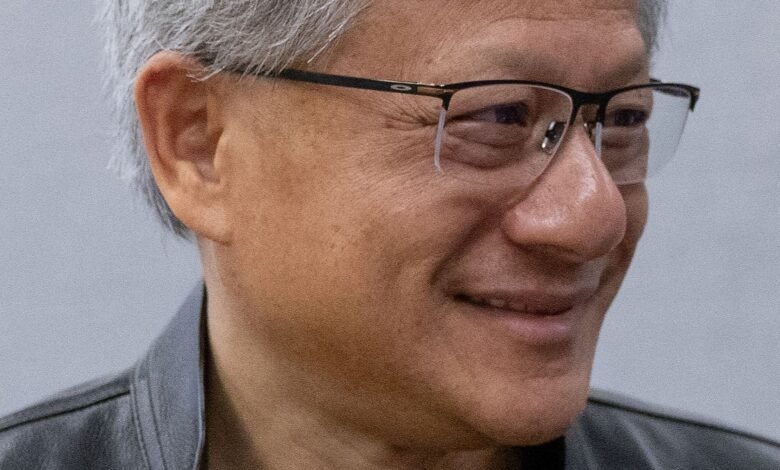
Jensen Huang is back as Nvidia’s chief executive. The company’s board reinstated him as president, chief executive and board member on Monday 23 November 2026, effective immediately, just 11 days after he resigned. The vote was unanimous, and it reverses a decision the board had defended only last week.
The return caps one of the strangest fortnights in the history of a company now worth trillions of dollars. Huang, Nvidia’s co-founder and its leader since 1993, stepped down on 12 November after admitting to at least two extramarital affairs. One of them was with a woman US officials suspect of links to Chinese intelligence. The board then said it had no intention of bringing him back. Eleven days later, it did exactly that.
Why the board changed its mind
Nvidia said the board reached its decision after a series of discussions and meetings with Huang, and that it was satisfied with his candour and his ability to lead the company. It also said it had received input from senior levels of the United States government, and that based on that input it was confident his reinstatement poses no national security risk.
Board chair Harvey C. Jones put it plainly in the company’s announcement: “The Board believes Jensen is the right person to lead NVIDIA, and that his reinstatement is in the best interests of our stockholders, employees, partners and customers.”
Jones had said the opposite only last week. On the company’s earnings call, he said the board had “unanimously accepted” Huang’s resignation and “does not intend to reinstate Jensen as CEO.” That position did not survive the week. Reuters reported that the reversal came under pressure from US President Donald Trump, who had openly called for Huang’s return.
Trump welcomed the decision on Monday. “The NVIDIA Board of Directors has made the correct and proper decision to return Jensen Huang to the position of CEO,” he wrote on Truth Social.
Huang himself said he was “honored to return to Nvidia and lead one of the most consequential technology companies in the world at the beginning of a new industrial revolution.”
What happened to the interim leadership
Colette Kress, who stepped in as interim chief executive when Huang resigned, will stay on as chief financial officer, the role she has held since September 2013. Kress delivered Nvidia’s third-quarter earnings report while she was interim CEO.
Jones, who became board chair after Huang’s removal, will remain in that role. Huang returns to all three of his old posts at once: president, chief executive and member of the board.
The stock market loved it
Investors reacted fast. Nvidia shares, which had lost about a third of their value in the two weeks since Huang resigned, jumped by about 30 percent in early trading on Monday, according to Reuters, which reported the stock leapt 33 percent in early trading. The wider market rallied too, with the Nasdaq and the S&P 500 both rising as AI-exposed shares recovered.
The reaction shows how closely Nvidia’s value is tied to one person. The company dominates the market for the chips that power artificial intelligence, and investors plainly see Huang as the person who built that position. TechCrunch’s account of the reversal noted that the board’s move highlights how dependent one of the world’s most valuable companies remains on its co-founder.
What is still unresolved
The reinstatement does not close the questions around Huang. Nvidia said its investigation into reports that he had been the target of a foreign intelligence effort will continue. The board has formed a committee made up only of independent directors to run that investigation, with independent counsel assisting it, and the company has also set up a new National Security and Export Control Committee.
It is important to be careful about what has actually been established. US officials have raised concerns that the woman involved, Alice Huang, was in contact with an officer from China’s Ministry of State Security between spring 2025 and autumn 2026, overlapping with the affair. But US authorities have not conclusively established that she was a Chinese spy, and no court has ruled on the matter. Huang has said he will cooperate fully with the investigation, and he has agreed to testify before the Senate Banking Committee.
The episode has also raised awkward questions about how the board handled it. It fired one of the most successful chief executives in corporate history within about a day of the revelations, then brought him back less than two weeks later. As one market strategist told Reuters, it is “a textbook example of poor governance” to reverse a decision of that size so quickly, even if the market liked the outcome.
What happens next
For now, Nvidia is back to business as usual, with the same chief executive it had a fortnight ago. The company still has to answer the questions hanging over it: what its investigation finds, what Huang tells the Senate Banking Committee, and whether the board’s new export-control committee changes how it does business.
But the immediate message from the market is clear. Investors wanted Jensen Huang back, the board agreed, and the president agreed too. Our report on his resignation covered how the affair revelations forced him out in the first place. This is the other half of that story: eleven days out, and straight back in.
FAQ
How long was Jensen Huang out as Nvidia CEO?
Eleven days. He resigned on 12 November 2026 and was reinstated on 23 November 2026, effective immediately.
Why did Nvidia reinstate Jensen Huang?
The board said it was satisfied with his candour and leadership ability after meetings with him, and that input from senior US government officials left it confident his return poses no national security risk. President Donald Trump had also publicly called for his return.
Who was Nvidia’s interim CEO?
Colette Kress, the company’s chief financial officer since 2013. She remains CFO now that Huang is back.
Is the investigation into Jensen Huang over?
No. Nvidia said the independent investigation into reports that Huang was the target of a foreign intelligence effort continues, and the company has set up a new National Security and Export Control Committee.


