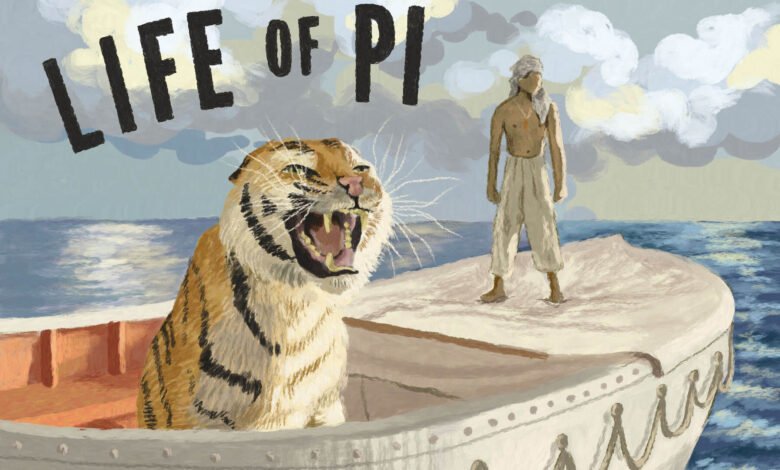
Life of Pi is an internationally recognized adventure story that combines survival, spirituality, philosophy, and the mysteries of human imagination. Written by Yann Martel and published in 2001, the novel follows a young Indian boy named Piscine Molitor Patel, commonly known as Pi, whose life changes dramatically after a devastating shipwreck. Stranded in the Pacific Ocean with a Bengal tiger, Pi must find ways to survive while confronting hunger, fear, loneliness, and uncertainty. What begins as a story about physical survival gradually develops into a deeper exploration of faith, human nature, and the meaning people find in difficult experiences.
The novel gained even greater international recognition through its 2012 film adaptation, directed by Ang Lee. The movie brought Pi’s extraordinary journey to life with striking ocean scenery, detailed animal imagery, and impressive visual effects. Both the novel and the film invite audiences to consider an important question: how do people maintain hope when circumstances seem impossible? The story’s unusual combination of adventure and philosophical questions makes Life of Pi memorable for readers and viewers of different ages.
What Is Life of Pi About?
The Story of Pi Patel
Pi Patel grows up in Pondicherry, India, where his family operates a zoo. His childhood introduces him to different animals, religious traditions, and questions about the world. His interest in spirituality leads him to explore Hinduism, Christianity, and Islam, developing a personal relationship with several religious traditions. His curiosity and openness become important parts of his identity, especially when he encounters situations that challenge his understanding of life.
Pi’s peaceful childhood eventually comes to an end when his family decides to move to Canada. They board a Japanese cargo ship carrying some of the zoo animals, hoping to begin a new life. During the voyage, the ship sinks, leaving Pi stranded at sea. The disaster separates him from his family and forces him into a situation for which his ordinary childhood experiences could never fully prepare him.
The Shipwreck and the Pacific Ocean
After the shipwreck, Pi finds himself in a lifeboat with several animals, including a Bengal tiger named Richard Parker. As the story progresses, the tiger becomes the central presence in Pi’s struggle to survive. Pi must understand animal behavior, manage limited supplies, collect rainwater, and find food while avoiding becoming the tiger’s next meal.
The ocean becomes both a source of danger and an opportunity for survival. Storms, heat, hunger, and isolation constantly threaten Pi’s life. His journey is not simply a test of physical endurance; it also challenges his emotional stability and spiritual beliefs. The relationship between Pi and Richard Parker becomes a complicated mixture of fear, discipline, dependence, and adaptation.
Life of Pi Characters
Pi Patel
Pi Patel is the central character and the storyteller of the novel. His intelligence, curiosity, spirituality, and determination help him face extraordinary difficulties. Before the shipwreck, his interest in animals gives him some understanding of their behavior, while his religious exploration provides a framework for thinking about suffering and hope.
During his time at sea, Pi develops practical survival skills and learns to control his fear. He is not presented as someone who never feels helpless or frightened. Instead, his strength comes from his ability to keep thinking and acting even when he is overwhelmed. His experiences also raise questions about how people preserve their identities when their familiar world disappears.
Richard Parker
Richard Parker is the Bengal tiger sharing Pi’s lifeboat. He represents immediate physical danger, but he also becomes an important reason for Pi to remain alert and active. Pi cannot afford to become careless because the tiger’s presence demands constant attention.
Their relationship is not a conventional friendship. Richard Parker remains a wild animal with powerful instincts, and Pi must respect the danger he represents. At the same time, caring for the practical demands of living alongside the tiger gives Pi a demanding routine. Richard Parker therefore functions as both a threat and a central element of Pi’s struggle to remain alive.
The Major Themes of Life of Pi
Faith and Spirituality
Faith is one of the most important themes in Life of Pi. Pi’s interest in multiple religions reflects his belief that spiritual understanding can take different forms. His experiences encourage readers to consider how belief influences people’s responses to uncertainty, suffering, and circumstances beyond their control.
The novel does not reduce faith to a simple answer or a guarantee of safety. Pi experiences fear, grief, and desperation even while maintaining a spiritual outlook. His story instead explores the possibility that faith can offer comfort, purpose, and a way to interpret experiences that appear meaningless. Readers can examine these ideas whether they approach the story from a religious, philosophical, or secular perspective.
Survival and Human Strength
Survival is the story’s most visible theme. Pi must use observation, patience, creativity, and discipline to meet his basic needs. His situation demonstrates that survival is rarely dependent on a single extraordinary action. It often involves repeated decisions, careful attention, and the ability to adapt when circumstances change.
Pi’s experience also illustrates the importance of psychological endurance. Loneliness and fear can be as challenging as hunger or physical danger. By creating routines and setting practical goals, Pi finds ways to give structure to his days. His determination shows how hope can work alongside preparation and action rather than replacing them.
Truth, Imagination, and Storytelling
One of the most discussed aspects of Life of Pi is its exploration of truth and storytelling. The novel presents a second account of Pi’s experiences that changes how readers interpret the events they have followed. This development raises questions about memory, trauma, imagination, and the way people communicate painful experiences.
The story encourages readers to consider whether factual accuracy is the only measure of a meaningful account. A story can also shape how people understand suffering, identity, and the world around them. However, the novel does not simply provide an easy answer about which version to accept. Its ambiguity is part of what makes the ending so widely discussed.
Life of Pi Movie and Its Visual Storytelling
The 2012 film adaptation of Life of Pi brought the novel’s ocean adventure to a worldwide cinema audience. Directed by Ang Lee, the movie uses visual effects, cinematography, and sound design to communicate the beauty and danger of Pi’s surroundings. The vast ocean, dramatic skies, and striking animal imagery help create a sense of isolation and wonder.
The film also explores the relationship between Pi and Richard Parker through visual storytelling. Their interactions communicate tension and changing patterns of behavior without relying entirely on dialogue. The movie’s visual approach makes the story accessible to audiences who may not be familiar with the novel’s philosophical discussions.
Although the film follows the central events of the book, adaptations inevitably make different storytelling choices. The novel offers more room for Pi’s thoughts and detailed reflection, while the movie communicates many experiences through images, movement, and atmosphere. Both versions provide different ways to engage with the story’s questions about belief, survival, and truth.
Why Life of Pi Remains Popular
Life of Pi continues to attract attention because its central questions are not limited to one culture, age group, or historical period. Almost everyone can understand the desire to survive difficult circumstances, find meaning in uncertainty, and maintain hope when life becomes unpredictable. Pi’s unusual journey gives these familiar concerns a memorable setting.
The novel also rewards readers who enjoy stories with more than one possible interpretation. Its adventure narrative can be appreciated on its own, while its philosophical elements invite deeper discussion. Readers may focus on religious symbolism, animal behavior, psychology, or the relationship between imagination and reality. This flexibility makes the book suitable for both personal reading and classroom discussion.
Another reason for its popularity is the memorable relationship between Pi and Richard Parker. Their situation creates suspense while raising questions about the boundaries between humans and animals. The tiger is not simply a symbol; he is also a powerful presence whose behavior shapes the practical realities of Pi’s survival.
Conclusion
Life of Pi is much more than an adventure about a boy stranded in the Pacific Ocean. Through Pi Patel’s extraordinary experience, Yann Martel explores faith, survival, human resilience, imagination, and the complicated nature of truth. The story combines the excitement of an ocean journey with questions that encourage readers to reflect on their own understanding of life.
Whether experienced through the novel or Ang Lee’s film adaptation, Life of Pi offers an unforgettable story about facing uncertainty. Pi’s relationship with Richard Parker, his determination to survive, and the novel’s ambiguous ending leave audiences with ideas worth considering long after the journey is over.
Frequently Asked Questions
1. What is Life of Pi mainly about?
Life of Pi is about an Indian boy named Pi Patel who survives a shipwreck and becomes stranded in the Pacific Ocean with a Bengal tiger. The story explores survival, faith, loneliness, imagination, and the meaning of truth through his extraordinary journey.
2. Who wrote Life of Pi?
Life of Pi was written by Yann Martel, a Canadian author. The novel was published in 2001 and became internationally recognized for its combination of adventure, philosophical questions, and spiritual themes.
3. Is Life of Pi based on a true story?
No, Life of Pi is a work of fiction. Although its survival narrative and emotional themes may feel realistic, Pi Patel and his extraordinary journey are part of Yann Martel’s fictional story.
4. What does Richard Parker represent in Life of Pi?
Richard Parker can be interpreted in several ways, including as a symbol of danger, instinct, fear, and the demands of survival. His presence also gives Pi a reason to remain alert and maintain a routine while stranded at sea.
5. What is the message of Life of Pi?
The novel explores how people respond to suffering, uncertainty, and difficult choices. It invites readers to think about the roles of faith, resilience, imagination, and storytelling in making sense of life’s experiences, without requiring one single interpretation.