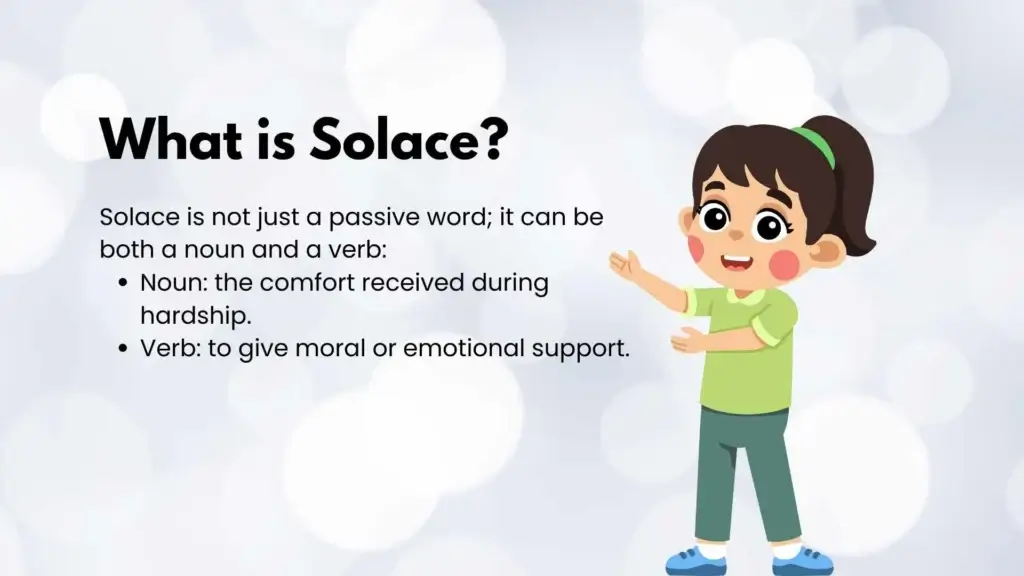
The solace meaning centers on the powerful human need for comfort, peace, and emotional relief during times of distress. In everyday life, people often experience sadness, loss, stress, or disappointment, and during these moments they search for something that brings calm and reassurance. That sense of relief, support, or quiet emotional healing is what we call solace.
In language, literature, psychology, and daily conversation, the word solace represents more than simple comfort. It reflects a deep emotional response that helps individuals cope with pain, hardship, or loneliness. While challenges and negative experiences are unavoidable, the ability to find solace allows people to restore balance and regain hope.
Quick Bio
| Detail | Information |
|---|---|
| Word | Solace |
| Part of Speech | Noun / Verb |
| Origin | Latin solacium meaning comfort |
| Core Meaning | Comfort or consolation during distress |
| Common Use | Emotional healing, reassurance, peace |
| Related Terms | Comfort, consolation, relief, reassurance |
Solace Meaning Explained in Simple Terms
The solace meaning can be defined as a feeling of comfort or consolation in a time of sadness, grief, or disappointment. It often appears when someone or something helps reduce emotional pain.
Solace can come from many sources. A supportive friend, peaceful music, spiritual practices, nature, or even quiet reflection can provide a sense of calm during difficult times. In this way, solace acts as a mental and emotional refuge when circumstances become overwhelming.
Another important aspect of solace is its deep emotional connection. It is not only about temporary happiness but about genuine reassurance that softens sorrow. While problems may still exist, solace gives people the strength to continue moving forward with renewed hope.
The Emotional Power Behind Solace
Solace as Emotional Healing
One of the most powerful elements of the solace meaning is its connection to emotional healing. When individuals experience grief, disappointment, or stress, their emotional state can become unstable. Solace works as a gentle emotional remedy that helps restore mental peace.
For example, someone grieving a personal loss may find solace in memories, meaningful conversations, or spiritual reflection. These moments do not erase the pain entirely, but they ease emotional intensity and allow gradual recovery.
Solace and Human Resilience
Another key dimension of solace is its role in building resilience. Life contains both positive achievements and painful setbacks. Solace helps individuals manage these negative experiences by providing emotional grounding.
Through solace, people develop inner strength and perspective. Instead of becoming overwhelmed by hardships, they learn to accept difficulties while maintaining emotional stability.
Positive and Negative Contexts of Solace
Positive Aspects of Solace
The positive side of solace is its ability to create calm, encouragement, and emotional safety. When people find solace, they feel supported and understood. This feeling strengthens relationships and promotes psychological well-being.
Solace also promotes mental clarity and hope. During stressful periods, comfort allows individuals to pause, reflect, and approach challenges with a clearer mindset. In many situations, solace becomes the foundation for emotional recovery and personal growth.
Negative Interpretations of Solace
Although solace is generally positive, there can also be negative interpretations. Sometimes individuals rely on temporary comforts that do not truly solve their problems. For example, escaping difficulties through avoidance or unhealthy habits might appear to provide solace but may worsen long-term issues.
True solace should support healing and reflection rather than encourage avoidance. When comfort leads to emotional growth, it becomes meaningful; when it hides problems, it loses its deeper value.
ources Where People Find Solace
Solace in Relationships
Human connection is one of the most powerful sources of comfort. Talking with trusted friends or family members can provide reassurance and emotional understanding. These relationships help people feel less alone during challenging moments.
Compassionate listening and supportive conversations often become a powerful form of solace, helping individuals release stress and process difficult emotions.
Solace in Nature
Many individuals discover solace through natural environments. Quiet landscapes, forests, oceans, or mountains can create a peaceful atmosphere that calms the mind.
Nature offers a sense of balance and perspective. When surrounded by natural beauty, people often feel renewed emotional stability and mental clarity, which helps reduce anxiety and sadness.
Solace in Creativity
Creative expression is another meaningful source of comfort. Writing, painting, music, and other artistic activities allow individuals to transform emotional pain into creative expression.
Through creativity, feelings that might otherwise remain trapped can be expressed and understood. This process often leads to deep emotional relief and personal insight.
Solace Meaning in Literature and Culture
Literary Importance of Solace
In literature, the concept of solace frequently appears in stories about loss, personal struggle, and emotional recovery. Writers often portray characters searching for comfort during difficult journeys.
These narratives show how solace can emerge through friendship, love, reflection, or self-discovery. The literary use of solace emphasizes its role as a universal human experience shared across cultures and generations.
Cultural Interpretations of Solace
Different cultures interpret solace in unique ways. Some traditions emphasize spiritual practices such as meditation or prayer, while others focus on community support and family bonds.
Despite cultural differences, the core meaning remains consistent. Solace always represents a pathway toward emotional balance and peace during hardship.
Practical Ways to Find Solace in Daily Life
Reflection and Mindfulness
Mindfulness practices help individuals become aware of their emotions without judgment. Quiet reflection, breathing exercises, or meditation can create a sense of calm.
These techniques encourage individuals to accept emotions rather than resist them. As a result, mental tension gradually decreases and emotional stability increases.
Building Supportive Connections
Strong relationships provide one of the most reliable sources of comfort. Sharing feelings with supportive individuals creates trust and understanding.
When people know they are not alone in their struggles, they often experience greater emotional strength and reassurance.
Personal Growth and Acceptance
Solace is also connected to personal acceptance and growth. Recognizing that difficulties are part of life allows individuals to approach challenges with patience and maturity.
Through acceptance, people develop resilience and learn to find meaningful comfort even during uncertain circumstances.
The Psychological Value of Solace
Psychologists often describe solace as a natural coping mechanism that helps individuals manage emotional stress. Instead of suppressing emotions, solace allows people to process feelings gradually.
This emotional processing reduces anxiety and promotes mental health. When individuals find healthy forms of solace, they become better equipped to handle future challenges.
Furthermore, solace encourages self-compassion and empathy. People who understand the importance of comfort often extend that compassion to others, creating stronger social connections.
Conclusion
The solace meaning represents far more than simple comfort. It symbolizes the human ability to find peace, reassurance, and emotional healing during times of hardship. Whether discovered through relationships, nature, creativity, or reflection, solace provides the strength needed to move forward.
Life inevitably contains both joy and sorrow. However, the presence of solace reminds us that even during the most difficult moments, comfort and hope remain possible. By embracing meaningful sources of solace, individuals can transform pain into resilience and rediscover emotional balance.
FAQ
What is the exact meaning of solace?
The solace meaning refers to comfort, consolation, or relief from emotional pain or distress. It is the feeling of calm and reassurance that helps individuals cope with sadness or disappointment.
Solace can come from people, experiences, memories, or peaceful environments that help reduce emotional tension and restore inner peace.
Can solace be a person or an action?
Yes, solace can refer to both a person who provides comfort and an action that brings emotional relief. For example, supportive friends can offer solace, while activities like listening to music or spending time in nature can also provide it.
In both cases, the core idea remains the same: reducing emotional suffering through comfort and reassurance.
Is solace always positive?
Solace is generally positive because it promotes emotional healing and stability. Healthy sources of solace encourage reflection, acceptance, and personal growth.
However, temporary comforts that avoid real problems may create a false sense of solace. True solace supports genuine healing rather than emotional escape.
Why is solace important for mental health?
Solace plays a crucial role in emotional well-being and psychological resilience. It allows individuals to process painful experiences without becoming overwhelmed.
By providing comfort and emotional balance, solace helps people maintain hope, strengthen relationships, and navigate life’s challenges with greater confidence.