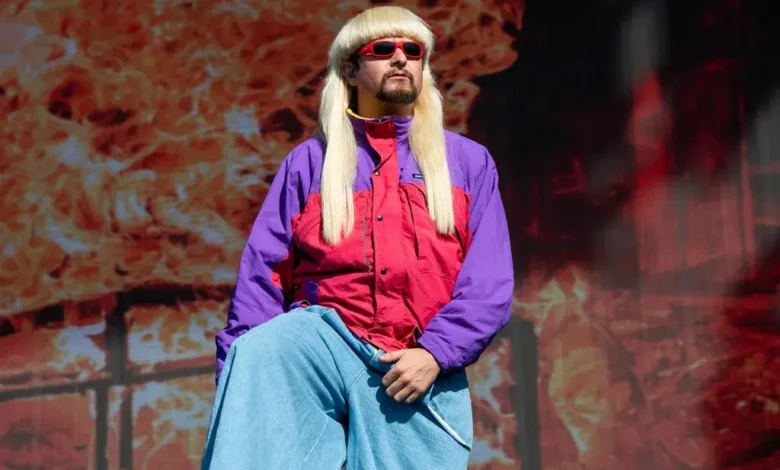
Oliver Tree Nickell was an American singer, songwriter, producer, and comedian known for blending alternative pop, electronic music, and rock with an unusual visual style. He became widely recognized for his bowl haircut, oversized outfits, exaggerated expressions, and music videos that often combined humor with emotional storytelling. His songs, including “Alien Boy,” “Hurt,” “Life Goes On,” and “Miss You,” helped establish him as a distinctive figure in modern internet-driven music.
Oliver Tree’s appeal went beyond music alone. He developed a memorable artistic character that encouraged audiences to question whether they were watching a serious musician, a comedian, or a performer deliberately making fun of celebrity culture. That mixture of satire and sincerity became a defining feature of his work, making him a frequent subject of online discussions and searches.
Oliver Tree’s Musical Career and Public Image
Tree began releasing music in the early 2010s and gradually built an audience through independent projects, collaborations, and unusual visual content. His career expanded significantly after he signed with Atlantic Records and released music that reached listeners across streaming platforms and social media. His debut studio album, Ugly Is Beautiful, arrived in 2020, followed by Cowboy Tears in 2022 and Alone in a Crowd in 2023. In 2026, he released Love You Madly, Hate You Badly, adding another chapter to his musical legacy.
His unconventional presentation made him especially recognizable online. While some artists rely on traditional publicity, Tree often used absurd humor, visual exaggeration, and deliberately strange behavior to attract attention. These choices helped him create a recognizable identity, but they also meant that information about him could circulate alongside jokes, fictional scenarios, and unverified claims.
What Does “Oliver Tree Autopsy” Mean?
The search phrase “Oliver Tree autopsy” may be used by people seeking information about his reported death, forensic identification, or the circumstances surrounding the fatal helicopter accident in Brazil. The word autopsy refers to a medical examination of a deceased person’s body, generally performed to help establish the cause or circumstances of death.
However, searching for this phrase does not mean that every result accurately describes an official medical finding. Search engines can display news reports, social media posts, speculation, and unrelated material together. Readers therefore need to distinguish between confirmation that a person died, reports about forensic identification, and specific medical conclusions that authorities may or may not have publicly released.
Understanding Online Searches and Celebrity Rumors
When a celebrity’s death becomes headline news, audiences often look for additional details that go beyond the initial announcement. Questions about identification, the cause of death, and the investigation can lead to searches using terms such as “autopsy,” “forensic report,” or “death investigation.”
These searches can produce confusing results because a headline may discuss identification without publishing an autopsy report. Similarly, a social media post may repeat an unconfirmed claim as though it were an established fact. A responsible article should explain what reliable reporting confirms without presenting private medical details or unsupported descriptions as proven information.
Is There Verified Information About an Oliver Tree Autopsy?
There is verified reporting that Oliver Tree died on June 14, 2026, at age 32, in a helicopter collision in Rio de Janeiro, Brazil. The Associated Press reported that two helicopters collided and crashed, killing all six people aboard. Tree’s representatives directed the news organization to an announcement confirming his death, and his record label also issued a statement expressing its grief.
A Mexican news report published by N+ on June 17, 2026, stated that Brazilian authorities had completed the forensic identification of Tree’s remains. The report explained that identification had taken longer than for the other victims. This is evidence of a reported forensic identification process, but it should not be confused with publication of a complete autopsy report.
The distinction matters. The confirmed public information establishes the fatal helicopter accident and Tree’s death, while the precise medical findings of an autopsy should not be inferred from identification reports alone. The cause of the helicopter collision was still under investigation in the cited reporting, and it would be inaccurate to invent a final investigative conclusion or claim that an official autopsy document is publicly available without reliable evidence.
What Investigators Have Reported About the Accident
The available reporting provides additional context about the accident itself. According to CNN Brasil, the Rio de Janeiro forensic institute completed Oliver Tree’s identification on June 16, 2026, using dental records. A preliminary report from Brazil’s Aeronautical Accidents Investigation and Prevention Center, known as Cenipa, later described overlapping helicopter routes and compatible planned altitudes as relevant elements in the investigation.
These findings concern the circumstances of the aircraft collision, not the medical details of Tree’s death. A preliminary aviation report is also different from a final report: investigators must assess the available evidence before reaching conclusions about contributing factors. As of the latest reporting located for this article, the final investigation outcome could not be verified. Readers should therefore avoid treating preliminary findings as a definitive explanation of the tragedy.
Why Oliver Tree Attracts So Much Online Attention
Oliver Tree built a career around an unusual combination of music, comedy, fashion, and internet culture. His creative identity made him memorable, while his music reached audiences who might not ordinarily listen to alternative pop or electronic rock. Tracks such as “Life Goes On” and “Miss You” helped introduce his work to a broad international audience.
His distinctive public image also made him a popular subject for memes, reaction videos, and online discussions. When a recognizable personality becomes the focus of major news, search interest can shift rapidly from songs and albums to biographical questions and reports about their death. That helps explain why phrases such as “Oliver Tree autopsy” may attract attention, although popularity in search results does not establish the accuracy of every claim associated with the phrase.
His Distinctive Style and Music Videos
Tree’s visual approach was central to his artistic identity. His exaggerated clothing, recognizable haircut, and absurdist humor created a contrast with the emotional themes that often appeared in his songs. Rather than maintaining a conventional pop-star image, he used performance and comedy to build a fictionalized public persona that audiences could immediately recognize.
His music videos extended that approach by combining strange imagery with catchy arrangements and carefully constructed characters. This creative freedom helped distinguish him from artists who depend primarily on conventional performances or straightforward promotional campaigns. His work remains an important part of the context for understanding why fans continue to search for information about his life and career.
The Difference Between Facts and Internet Speculation
When researching Oliver Tree autopsy news, it is useful to separate established information from claims that lack documentary support. Reliable news reporting and official statements can help establish the broad circumstances of an event, but they do not automatically verify every detail repeated online.
A practical way to evaluate a claim is to ask three questions: Who originally reported it? Does the source cite an official statement or identifiable document? And does the evidence actually support the specific conclusion being presented? For example, a report confirming forensic identification supports the conclusion that authorities identified the deceased person. It does not, by itself, establish the precise medical cause of death or reveal every finding from an autopsy.
Responsible coverage also respects the privacy of the deceased and their families. Graphic descriptions and speculative medical claims rarely help readers understand an investigation. Accurate reporting is more useful because it explains what is known, identifies what remains uncertain, and avoids presenting assumptions as facts.

Oliver Tree’s Career Beyond the Rumors
Although searches about his death have become part of his online legacy, Oliver Tree’s career deserves attention beyond the circumstances of the accident. His albums explored different musical directions, from alternative pop and electronic influences to the country-inspired sounds of Cowboy Tears. His willingness to experiment helped him maintain a distinctive identity in an industry where artists are often encouraged to repeat their most commercially successful formulas.
His 2026 album, Love You Madly, Hate You Badly, represents another part of that creative history. His recordings, videos, performances, and collaborations offer a more complete picture of his work than a single search phrase can provide. Fans looking to understand his influence can explore the evolution of his sound, the characters he created, and the way he used humor to challenge traditional expectations of pop stardom.
His record label, Atlantic Records, publicly described him as an inventive artist and songwriter following his death. The statement reflected the loss felt by people who worked with him and emphasized the impact of his creativity.
Conclusion
The keyword “Oliver Tree autopsy” reflects public interest in the forensic details surrounding the singer’s death in a helicopter collision in Rio de Janeiro on June 14, 2026. Reliable reports confirm his death and state that Brazilian authorities identified his remains through forensic examination, with one report specifying dental identification. However, those facts should not be confused with a publicly verified, comprehensive autopsy report or a final determination of every factor involved in the crash.
The most responsible approach is to rely on established reporting, distinguish preliminary findings from final conclusions, and avoid repeating unsupported medical details. Oliver Tree was more than a headline: he was a musician and performer whose distinctive sound, unconventional humor, and creative visual identity made a lasting impression on his audience. Understanding that broader legacy provides a more meaningful perspective than speculation alone.
Frequently Asked Questions (FAQs)
1. What does “Oliver Tree autopsy” mean?
The phrase generally refers to searches for forensic information connected with Oliver Tree’s death. It may include questions about the identification of his remains, medical examinations, and the circumstances of the helicopter accident in Brazil. It is important to distinguish reports of forensic identification from a published autopsy report.
2. Did Oliver Tree die in 2026?
Yes. The Associated Press reported that Oliver Tree died on June 14, 2026, at age 32, when two helicopters collided in Rio de Janeiro, Brazil. All six people aboard the two aircraft died.
3. How was Oliver Tree identified after the accident?
CNN Brasil reported that the Rio de Janeiro forensic institute completed his identification using dental records on June 16, 2026. The identification process was reported separately from the ongoing investigation into the accident’s causes.
4. Has the official autopsy report been released publicly?
A comprehensive official autopsy report could not be verified in the sources reviewed for this article. News reports about forensic identification do not necessarily disclose the findings of a complete autopsy, so specific medical conclusions should not be assumed.
5. What was Oliver Tree famous for?
Oliver Tree was known for his alternative pop and electronic-influenced music, comedic persona, distinctive bowl haircut, and unconventional music videos. Popular tracks included “Alien Boy,” “Hurt,” “Life Goes On,” and “Miss You.” His creative blend of music and visual comedy helped him develop a recognizable identity in internet culture.