SpaceX has caught a Starship upper stage for the first time. On Saturday 14 November 2026, the launch tower at Starbase in Texas closed its mechanical arms around Ship 42 after the spacecraft spent about 22 and a half hours in orbit. The other half of the mission did not go to plan: the Super Heavy booster was lost over the Gulf of Mexico the day before.
Flight 15 was meant to be the first “double catch” — both stages of the largest rocket ever flown returning to the same tower. SpaceX got one half right, and that half is still a first. No Starship upper stage had ever been caught before.
What happened on Flight 15
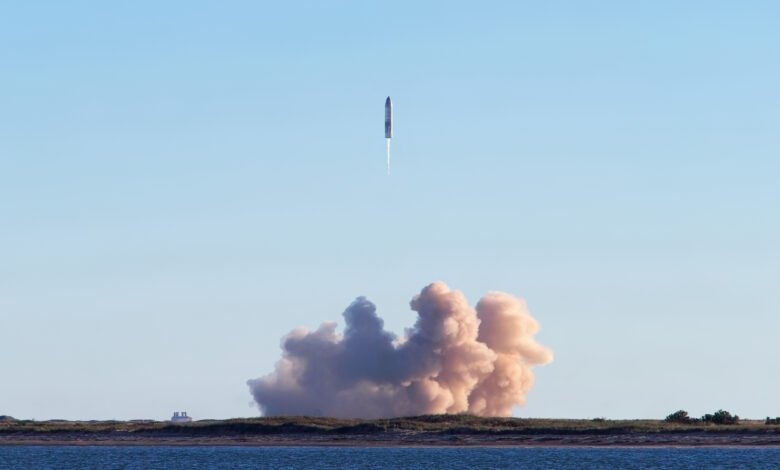
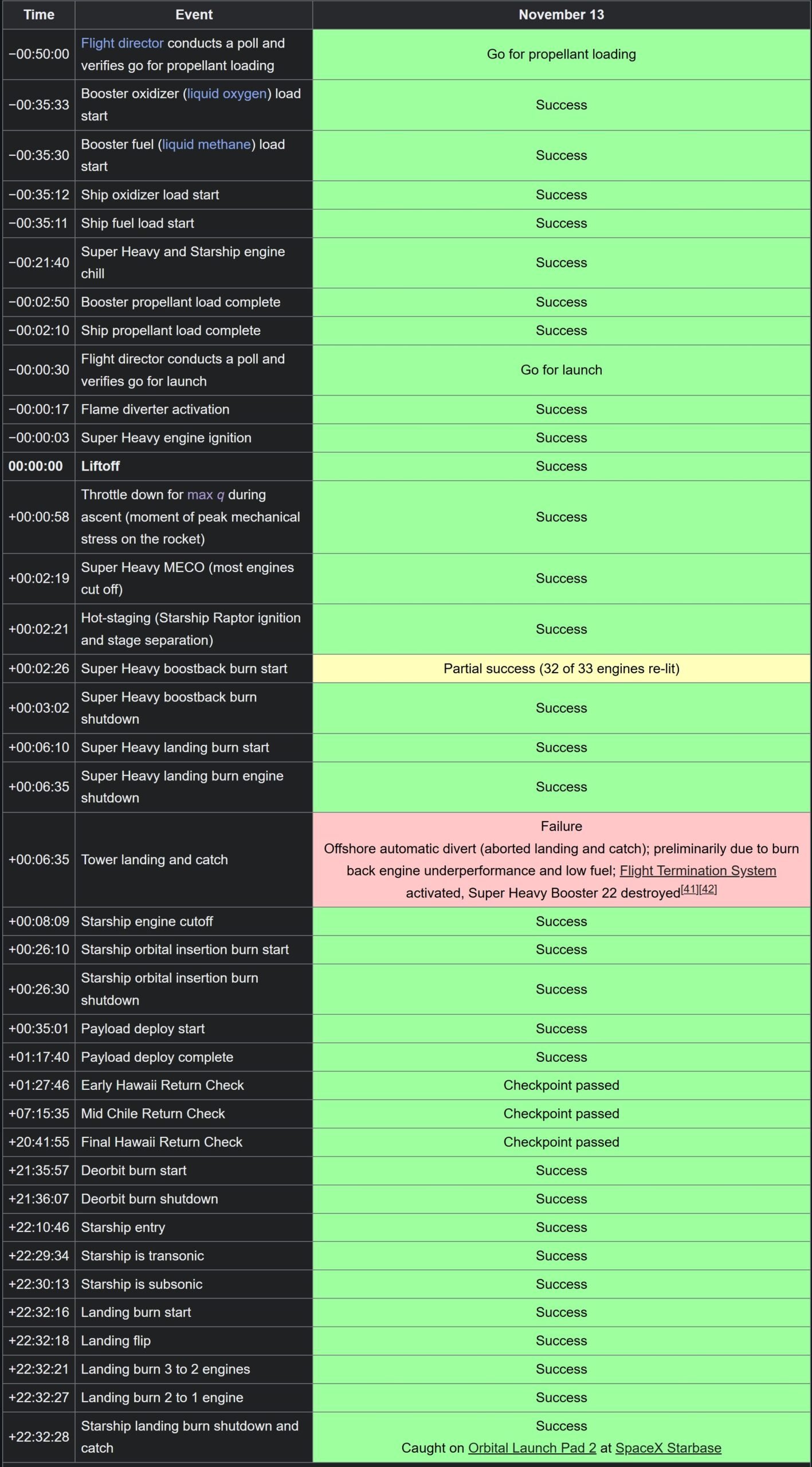
Flight 15 lifted off from Pad 2 at Starbase, on the southern tip of Texas, at 5:47 p.m. ET on Friday 13 November. The stack paired Ship 42 with Super Heavy Booster 22, and the Federal Aviation Administration had issued the launch licence that same afternoon. The flight timeline lays out each stage of the mission, from liftoff to the planned ship catch.
About six and a half minutes after liftoff, the booster was supposed to fly back to the tower and be caught by its arms. Instead, automated safety checks called off the catch, and the booster headed for the Gulf of Mexico. The upper stage carried on: it reached orbit at about 6:13 p.m. ET, only the second time a Starship upper stage has made it to orbit at all, and began releasing its cargo of 26 Starlink V3 satellites.
Ship 42 then spent roughly 22 and a half hours in space, completing about 14 orbits. On Saturday afternoon it fired a single Raptor engine for a deorbit burn of about ten seconds, fell back through the atmosphere, and lined up on the same tower it had left the day before. At about 4:20 p.m. ET, the tower’s arms closed around it, as live coverage of the catch showed. SpaceX confirmed the catch on X minutes later, writing, “Mechazilla catches Starship!”
The booster catch that did not happen
The booster never made it home. SpaceX said its boostback burn ended early because of low fuel, and its guidance system then decided the vehicle was not in the right position for a tower catch. The flight computer aborted the approach on its own and steered the booster to a spot offshore.
The booster performed a landing burn over open water and its flight termination system was then triggered. SpaceX has not said what caused the fuel problem, and its teams are still reviewing the booster’s telemetry. The abort itself is the system working as designed: a catch is only allowed when every automated check passes, and if any reading is off, the default is the ocean, not the tower.
That is why Flight 15 was not a full double catch, even though the headline moment worked. SpaceX had already caught Super Heavy boosters on three earlier flights. The ship catch was the piece that had never been demonstrated.
Why the ship catch matters
Catching the upper stage is the harder half of SpaceX’s reuse plan. A booster comes back within minutes, from just above the atmosphere. The ship has to survive a full trip to orbit, re-enter the atmosphere at extreme speed, and then slow down enough for the tower arms to grab it — all after a day in space.
SpaceX spokesperson Dan Huot summed it up on the webcast: “We caught a Starship, and now everything changes.” The point is simple. If both stages can be caught and flown again, the cost of each launch falls sharply, and the same rocket can fly far more often. That is what Starship was built for, and what missions to the Moon and Mars would depend on.
But a caught ship is not yet a reused ship. SpaceX has not said how much work Ship 42 will need before it could fly again, or whether it will fly again at all. It has also not announced a date for Flight 16. The next step is the investigation into the booster’s fuel problem, and then an attempt at the full double catch.
Flight 15 at a glance
Launch: Friday 13 November 2026, 5:47 p.m. ET, Starbase, Texas.
Ship 42: reached orbit, deployed 26 Starlink V3 satellites, completed about 14 orbits, and was caught by the tower on Saturday 14 November at about 4:20 p.m. ET.
Booster 22: catch aborted about six and a half minutes after launch; lost over the Gulf of Mexico.
Firsts: first catch of a Starship upper stage returning from orbit; first flight to attempt catching both stages.
One small detail from the flight: Ship 42 rolled to the pad with “Don’t Panic” painted on its side, a nod to Douglas Adams fans. The name fit the mission. The booster did not come home, but the ship did — and that is the part SpaceX had never done before.
Frequently asked questions
Was Flight 15 a complete success?
Not completely. The ship catch worked, which was a first, but the booster catch failed and the booster was lost. SpaceX attempted a double catch and achieved half of it.
Why did the booster not return to the tower?
SpaceX said the booster’s boostback burn ended early because of low fuel, and its guidance system triggered an automated abort. The underlying cause is still under investigation.
Will Ship 42 fly again?
SpaceX has not said. Recovering the ship is only the first step; the company still has to inspect it and decide whether it can be reflown.
What is Mechazilla?
Mechazilla is the nickname for the Starbase launch tower and its two mechanical arms, sometimes called chopsticks. The arms catch returning stages out of the air, so the rocket needs no landing legs.